 Skip to content
Trending Fire Department Patch Designs Used by Modern Rescue Teams
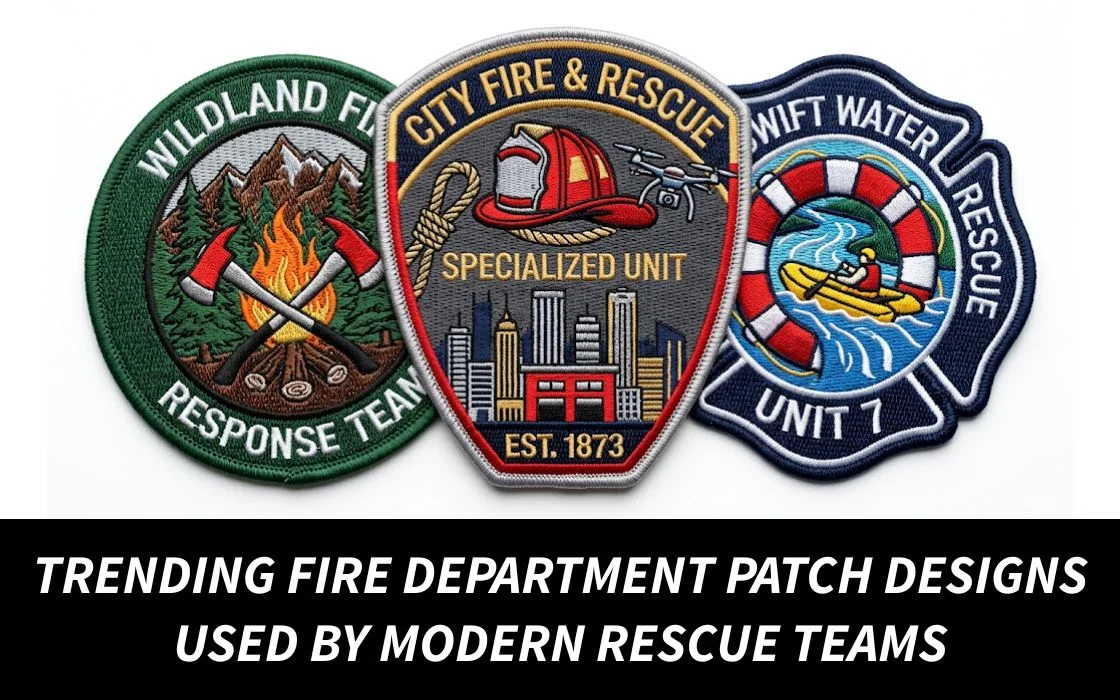
In earlier years, the purpose of fire department patches was for the official dress of firefighters only. In the past, they identified the unit, rank, and name of the department for a firefighter in a simple, formal and traditional way. Now modern rescue teams view them as symbols of:
- Team culture
- Shared experience
- Rescue specialization
- Community pride
- Emotional identity
This change with the use of emergency service worker patches has given way to a broad change of how patches are created, worn, and even respected, within emergency service departments.
The most interesting aspect of this fact is that many modern rescue teams are now designing and creating patches that accurately show who they are as teams and as individual members of their departments.
In short, this insight provides proof that fire department patches are no longer just badges of service to bring up visual stories.

How Fire Department Patches Became More Personal?
Older Patch Designs Were Mostly Formal
The majority structured designs focus on:
- Maltese crosses
- Axes used by fire fighters
- Name of your department
- Embroidery in gold or red
- A shield shape
The old fire department patches served a purpose for many years and worked well because of how formal and rank-based the firefighting culture has always been.
However, the characteristics of rescue work today do not match what was done years ago.
Modern Rescue Teams Have Stronger Internal Identity
Today’s rescue agencies typically have multiple specialty units including:
- Urban search and rescue
- Wildland response teams
- Marine rescue crews
- Hazard response teams
- Tactical EMS teams
Each unit has its own culture including inside jokes, traditions and way they operate.
According to someone in the technical rescue unit, “Our emergency services patches is a representation of those who were there with us during these difficult times. To be honest, that holds more meaning to me than an aesthetic value.”
The emotional value adds to the fact that patch designs now focus on emotion than ever before.
The Biggest Design Shifts Happening in Modern Rescue Patches
1. Storytelling Through Design
Storytelling design in modern patches has become one of the most popular trends. Rather than using standard logos, patches now include visuals that reflect their local surroundings or type of rescue work done by the team. Some examples of this are:
- Mountain and/or forest images for wildfire units
- Waves and/or anchors for coastal units
- City skyline silhouettes for urban rescue units
- Regional images for desert rescue units
The end result is that each department’s patch now conveys its own identity and personality. A patch designer who specializes in rescue patches said, “today, many departments want unique patches that represent who they are. In fact, I continue to see this trend grow every year.’’
Evolution of Fire Department Patches
2. Cleaner Designs Are Replacing Overcrowded Patches
Today’s rescue teams are creating patches with a cleaner approach bringing:
- Bold shapes
- Easier to read
- Less text
- Strong contrasts in color
- Tactical in look
This trend towards minimalism also adds to the need for the visual appearance of the newer uniforms. Additionally, the cleaner designs of emergency services patches can help with better visibility during emergency situations.
3. Reflective and Functional Embroidery Is Growing
Reflective embroidery on patches helps ensure that the patch can be seen at night or during a traffic accident or in low-visability situations such as smoke or performing search and rescue operations.
According to an emergency clothing report in 2026, the need for reflective thread is now more common among fire and rescue agencies. However, teams are now more cautious than ever before about balancing visibility with patch aesthetics.
4. Memorial and Legacy Patches Are Becoming More Emotional
One other trend that continues to grow is the applying of memorial patches.
Many fire departments now create emergency services patches that honor:
- Deceased firefighter(s)
- Historically significant rescue(s)
- Retired team leader honorifics
- An anniversary of service, etc.
Patches can take on great significance for their respective departments.
One firefighter expressed it this way: “Some patches help me to remember why I began this job in the first place“. The emotional ties between firefighters and their patches is a major reason why fire department patches have become an important part of the culture of today’s professional firefighters.
5. Morale Patches and Team Humor
The modern rescue culture accepts morale patches. These can have the following items on them:
- Nickname of the team
- Humorous sayings
- Mascots
- Inside jokes
- Special references to missions
This trend within the modern emergency team shows that there is greater importance on culture and morale than there is on hierarchy.
What Style Is Actually Dominating in 2026?
Hybrid Designs of Fire Department Patches Are Leading
Hybrid patches combine:
- Traditional fire department insignia
- Tactical layouts
- Reflective materials
- Personalized story-telling
Many teams are updating their traditional patch styles instead of completely replacing them. As such, this combination of traditional and modern has created hybrid patches to look both professional and personal.
Why Do These Designs Matter So Much?
Firefighters and rescue workers typically do not wear patches simply for just decoration. The patch can also serve to create:
- A common bond through shared trauma
- Teamwork through the brotherhood of the fire and rescue community
- Common danger through a job that often entails life-and-death situations
- Pride in being a part of your department
- Recognition of years served to the department and to the community
The current trend in modern rescue patch design refers to designing a patch that not only showcases authority, but also represents identity and experience.
To Wrap Up: Modern Rescue Patches Are Becoming Symbols of Identity
Fire Department patches are also changing to reflect the changes in modern rescue culture. Modern emergency services desire patches that represent:
- The communities from where they come
- The mission they are serving
- The identity of team members
- The experiences shared by team members.
Thus, modern emergency service patches have become even more meaningful, personal, and creative than ever before. In addition to being attached to uniforms, the new patches are beginning to show the culture of those wearing the patches.
FAQs
- Are classic fire department patch designs disappearing?
No, classic patch designs are still in use today, and are still valued among fire departments as they were before. Modern patch designs are simply being redesigned using a cleaner approach.
- Why are reflective patches becoming popular?
They help with visibility and safety while performing night-time rescue activities, and assist with visibility during emergency response operations.
- Are morale patches officially allowed?
This depends on the department policies. Some allow them for training or internal department events, while others continue with stricter uniform policies.
- Why do modern patches look simpler?
By using minimalistic visual design, they are much easier to identify quickly and better align the appearance of today’s tactical rescue gear.