 Skip to content
How Clothing Brands Use Custom Patches to Increase Perceived Product Value?
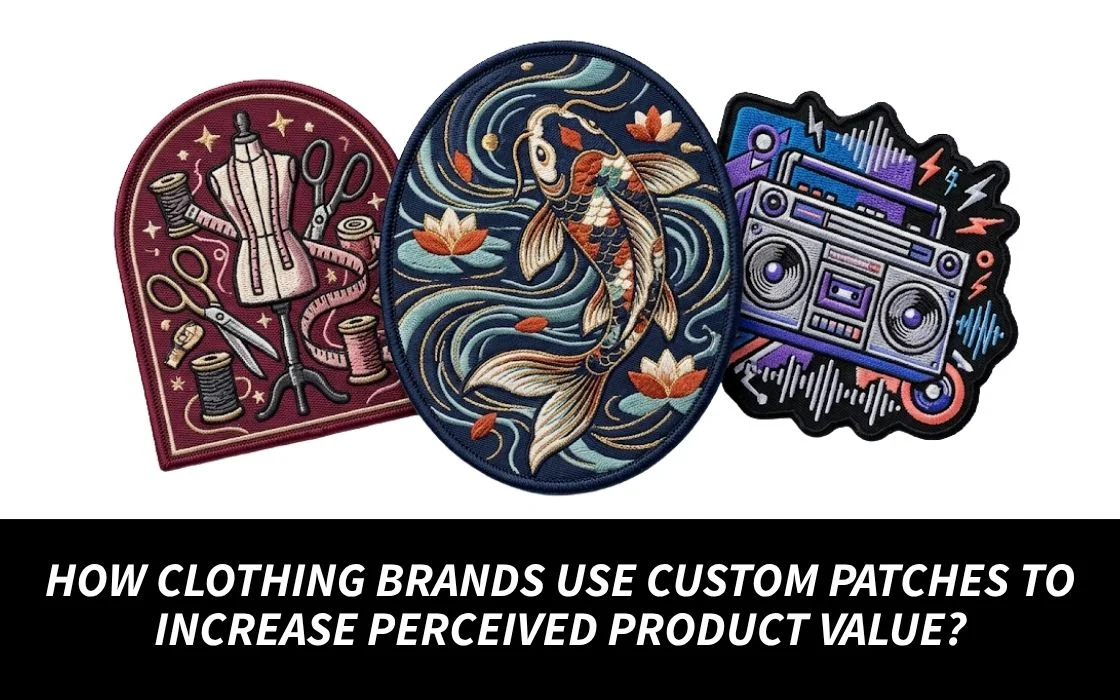
Regardless if it is embroidery, woven, chenille, leather or PVC patch, custom clothing patches play a role in helping brands turn ordinary clothes into extraordinary ones. For both new and established fashion brands, patches serve as a relatively cheap means of adding some personality to clothing without spending a lot on manufacturing.

Why Perceived Value Matters in Fashion?
Buyers rarely purchase clothes depending on the materials used and stitches. Buyers purchase the stories and expertise linked with the brand. When there is a patch made with professional designs for a hoodie or jacket, consumers view such products with high regard due to the extra effort put in the production. Consider how many popular street wear companies add on different woven labels, embroidered patches, and leather patches to give their clothes uniqueness.
What Makes Custom Clothing Patches Look Premium?
Some of the elements which affect the perception of a patch include:
- High density embroidery
- High-quality materials to avoid fading
- Sharp edges and proper stitching
- Quality backings that do not come off easily
- Colors that blend with the garment
Consumers can see through all these, but may not be able to explain why one garment appears better than the other.
How Different Patch Types Influence Customer Perception?
It is equally crucial to pick the right custom patch as it is to design the logo itself.
Patch Types | Best For | Perceived Value |
Embroidered | Uniforms, workwear, casual apparel | Classic and premium |
Woven | Detailed logos and fashion labels | Modern and refined |
Chenille | Varsity jackets and sportswear | Bold and nostalgic |
Leather | Denim, caps, luxury apparel | Premium and sophisticated |
PVC | Outdoor and tactical clothing | Durable and modern |
The harmonization of the custom patch style and the product will ensure the consistency of the brand identity and make the shopping experience more pleasant for customers.
Where Clothing Brands Use Custom Patches?
Unlike traditional logos, which are most commonly placed on the left chest, modern brands apply custom patches for clothing in many different places.
Most common placements are as follows:
- Left chest
- Sleeves of jackets
- Hoodies
- Caps and beanies
- Denim back
- Hem of shirt
- Backpacks and other accessories
How Custom Clothing Patches Help Brands Charge Higher Prices?
Customers see quality in attention to detail. Designing custom patches allows one to introduce unique textures and design that is not attainable through simple screen printing.
Two hoodies produced from the same material will be valued differently if one is designed using screen printing only and the other is designed with a custom patch.
Collections will also get an extra advantage due to the possibility of producing numbered custom patches which gives exclusiveness.
That is why it is widely used by many clothing brands to create a brand identity and improve perception and price levels among their consumers.
Common Mistakes That Reduce Perceived Product Value
Some of the most common errors to avoid include the following:
- Selecting bad quality materials that can wear off easily.
- Having a patch either bigger or smaller than the actual size of the garment.
- Selecting colours that do not complement the material.
- Using more words on the patch.
- Selecting a wrong patch material in relation to the garment.
For example, leather patches suit well with denim and expensive caps, while chenille patches suit varsity jackets.
Best Practices for Designing Premium Custom Clothing Patches
Consider following these guidelines:
- Make sure that the design is simple and recognizable.
- Use contrasting colors to make it highly visible.
- Choose appropriate material based on your apparels.
- Go for the right type of backing.
- Ensure consistency throughout your apparel range.
In case you are creating an expensive collection of clothes, first place a test order. This will enable you to know how the patch looks on the clothes and how people react to it.

A Simple Cost Comparison
Buyer Type | Best Option | Why? |
Startup clothing brand | Custom patches no minimum order | Ordering small amounts minimizes costs related to inventory. |
Corporate uniforms | Sample first | Avoids costly errors in production |
Motorcycle club | No-minimum order | Order only the right amounts that are necessary |
School or university | Sample first | Makes sure that colors and logos are correct |
Etsy seller | No-minimum order | Check the market before increasing production |
Final Thoughts
Choosing between a custom patch sample and custom patches with no minimums depends on the needs of your project rather than costs. If you are testing out a new design or placing a large order, then a sample makes sense so you have the reassurance before production begins. If your design is approved and you only need a small amount of patches, then a custom patches no minimum order saves you more money while giving you completed patches that you can use or sell.
When making your order, remember to compare project costs rather than the cost per patch. Look out for other expenses like set up fees, shipping costs, and order quantities as well as future demand for your patches. By spending a few minutes considering these factors, you will help yourself choose the correct option to avoid wasting money on unnecessary things and get the best possible value from your custom patch purchase.
Frequently Asked Questions
Are custom patch samples more expensive than no-minimum orders?
Although samples could be more expensive per item, this is due to the fact that they involve setting up and producing only one unit. If your design has already been approved, a no-minimum order will usually be more economical.
Can I order just one custom patch?
Sure. A lot of manufacturers offer custom patches no minimum so that you can order one ready-made patch or a small batch without worrying about meeting minimum order requirements.
Should I order a sample before a bulk purchase?
Certainly. A sample can help make sure that the colours, quality of stitching, size, and backing are satisfactory before the actual production, which will help avoid costly errors.
Which option is better for a new clothing brand?
Most new businesses would benefit from no-minimum orders because they would be able to test their products without having to invest too much money in stock. As soon as they see that the product is in demand, they can go for larger production runs, which will decrease their production costs.
Does ordering more patches always reduce the price?
In general, yes. Larger order quantities lower the price per item, but they also mean that you need to spend more money upfront. Find a quantity that will allow you to stay within your budget limits.