Halloween Patches vs. Embroidered Patches: Which Looks Better?
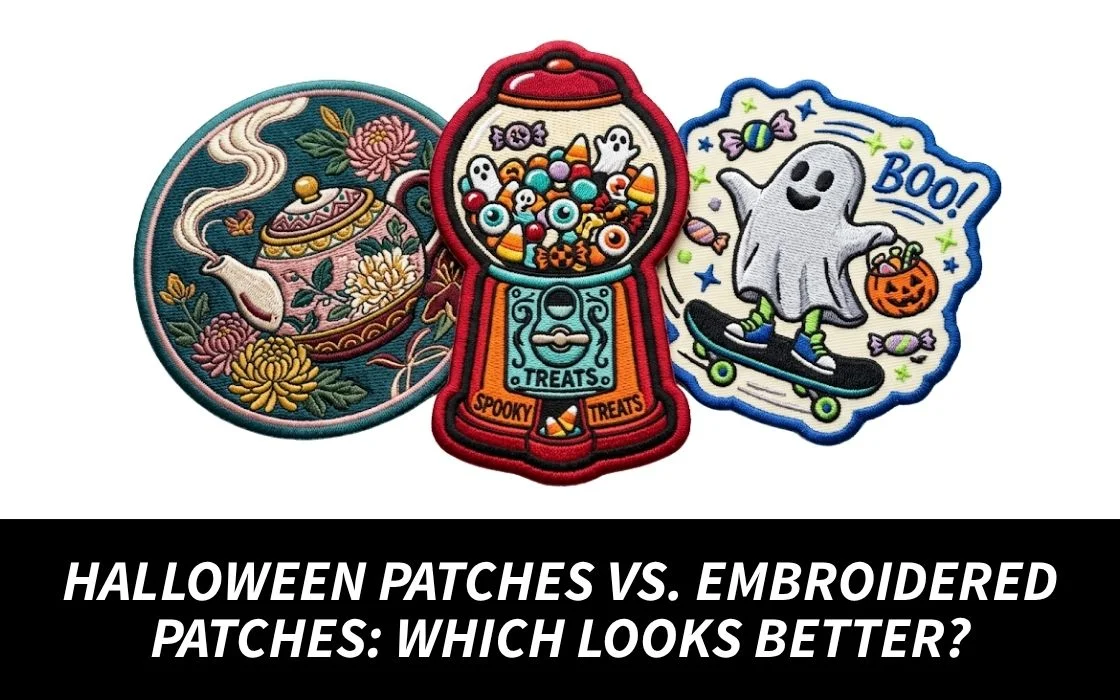
While the patches make a regular jacket, cap, tote bag, costume, or hoodie more personalized for you, it is the selection of the patch style that creates even more impact than what most customers would imagine. Patches with embroidery have a traditional raised appearance, while there are other patch types that will allow for smooth lines and finer art.
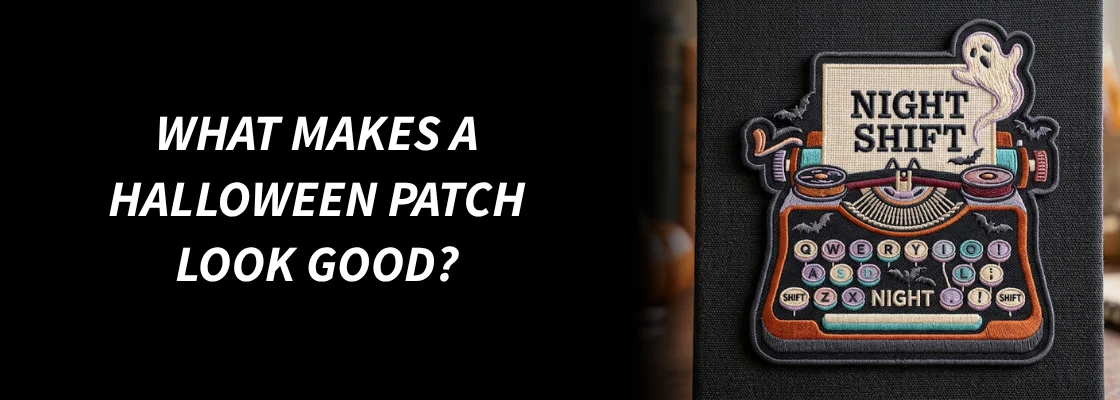
What Makes a Halloween Patch Look Good?
When choosing the right patch, keep in mind the following:
- Complexity of design: The design of simple pumpkins, ghosts, bats, and letterings is not the same as those of haunted houses or characters.
- Patch Size: Small patches offer limited space for detailed lettering, detailing and fine design elements.
- Texture: The raised stitch makes it look as though the patch was made traditionally by hand, whereas the smooth finish will give a modern and graphical effect.
- Where you will be wearing the patch: Textured patch can be worn on jackets and denim while for thin fabric, thin patch is recommended.
- Theme of Halloween: There are many themes for Halloween such as vintage, creepy, fun, gothic, cute, horror, and many others.
Embroidered Halloween Patches: Classic, Bold, and Textured
An embroidered patch continues to be among the most obvious types of patches since stitching helps create a dimensional look within the patch.
Manufactured embroidered patches are stitched using thread to form a design on the base of fabric like twill that provides the raised quality to the patch.
Embroidery is a great choice for designing patches based on Halloween designs with definite shapes and outlines.
Consider a black patch that carries an orange pumpkin, white letters, and the shape of a bat. An embroidery style will help create a raised design that will perfectly fit jackets, costumes, hats, and other club-style clothing.
When Should You Choose Embroidered Halloween Patches?
Use embroidery when your design has:
- Pumpkins or skull designs
- Halloween wording
- Ghost, bat, spider, or witch elements
- Cartoon-type designs
- Black outlines
- Classic or vintage illustrations
- Artwork for denim jackets, caps, uniforms, and costumes
What About Detailed Halloween Designs?
Many Halloween pictures tend to feature very small facial features, very thin lines, small lettering, multi-layer illustrations, and detailed background. All these features can be very difficult to reproduce due to the thicker threads used in embroidery.
Patches are differently constructed since fine threads are used to create the picture on a densely woven fabric.
According to one source in the patch industry for 2026, woven patches allow “preserving small text, thin lines, and layered artwork” more easily due to their flat and high density nature.
This is important when you need a small Halloween patch that needs to contain such elements as haunted houses, with windows, trees, moonlight, bats, and small lettering.
Embroidered vs. Woven Halloween Patches
Features | Embroidered Patches | Woven Patches |
Overall Appearance | Raised and textured | Flat and smooth |
Halloween Style | Classic, bold, traditional | Detailed, clean, modern |
Fine Line | Better with thicker artwork | Better for thin lines |
Small Lettering | Works better when lettering stays bold | Handles smaller lettering more effectively |
Texture | Strong visible stitching | Minimal surface texture |
Best Designs | Pumpkins, ghosts, bats, bold skulls | Detailed scenes, intricate artwork, small logos |
Best Clothing | Jackets, denim, caps, costumes | Lightweight clothing, detailed apparel, labels |
Which Looks Better on a Halloween Jacket?
If you plan to make a traditional Halloween jacket, patches with embroidery will produce a more impressive effect in cases where there are bold figures and big letters used in your design.
Imagine how an orange pumpkin, a black cat, ghosts, skulls, and Halloween slogans in orange will look on a denim jacket. The raised thread will highlight the patches in such a way that they would look better for the rough texture of the denim.
What About Small Halloween Patches?
Size can change the decision completely.
What may look fantastic when applied to a large embroidered patch can turn into an unclear image once you downsize the design.
A heavy stitch requires enough room for letters, narrow spaces, eyes and other small elements.
That is why manufacturers usually go for purchasing woven patches in case when very fine detailing is needed for the small patch size.
One particular production company states in their 2026 recommendations that woven patches are suitable in case when embroidery thread will cover up the small details.
When you are about to order a small patch, make sure you check the smallest lettering, narrowest line and smallest enclosed space in your design.
If it looks crowded in your digital design, downsizing the patch will not help you.
How to Choose the Right Halloween Patch?
Opt for an embroidery if you prefer:
- A three-dimensional classic look for Halloween
- High texture and stitching
- Visible pumpkins, skulls, ghosts, or bats
- Large letters
- A sturdy coat or costume patch
Go for a weave patch if you prefer:
- A flat look
- Small letters
- Fine lines
- Halloween scenes
- A small patch with a lot of detail
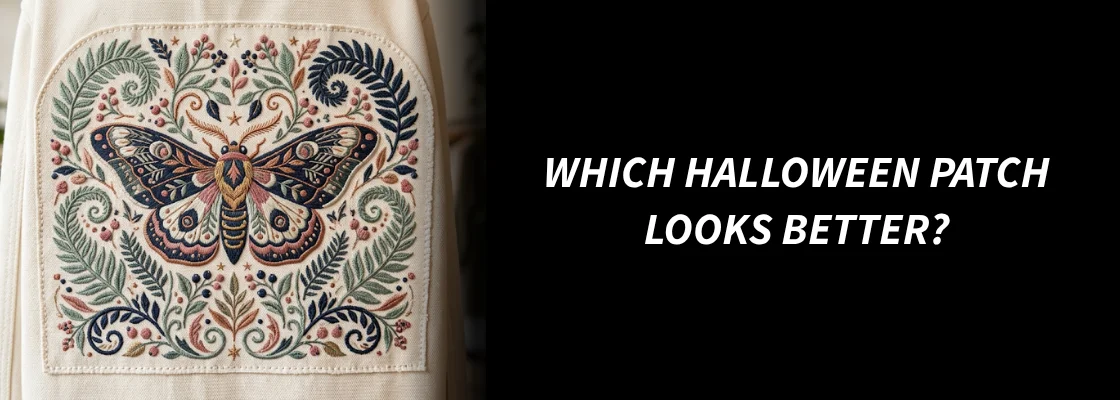
Final Verdict: Which Halloween Patch Looks Better?
There is no single patch style that looks better for every Halloween design.
The use of patch embroidery is very suitable where the requirement is of texture, depth, clear images, and traditional stitches. The most suitable option for designs based on small text, thin lines, or detailed artwork is the use of patch weaving.
Frequently Asked Questions
- Are woven patches better for detailed Halloween designs?
Yes, woven patches can cope with fine lines and smaller text because of their tight weave creating flat surfaces.
- Which Halloween patch type is best for jackets?
Embroidered patches go great with denim and Halloween jackets due to their raised embroidery giving the added texture.
- Can I use small text on an embroidered Halloween patch?
Yes, but very tiny text may become blurred because of limitations in space from thread thickness and stitch density.
- How can I know which patch type suits my design?
Provide your patch supplier with the actual artwork, the required patch size, and application to have your design evaluated properly.