 Skip to content
Custom Embroidered Patches: A Versatile Solution for Personal and Business Use
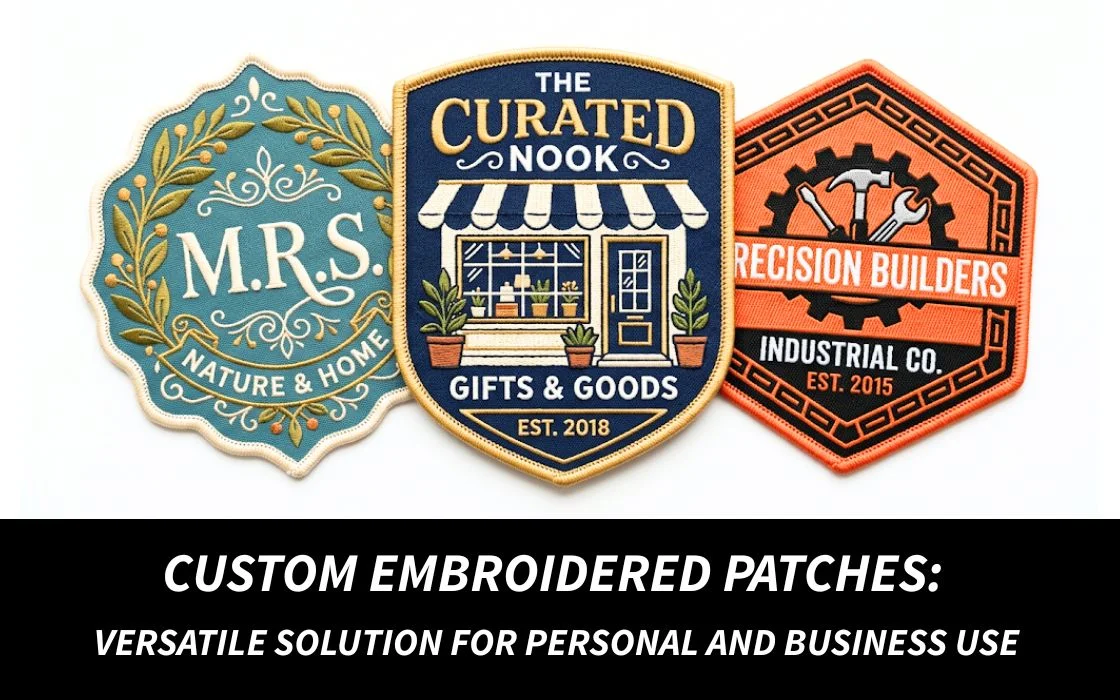
Many individuals are searching for a simple, durable and affordable solution which can be found in a custom embroidered patch. In a report on small company apparel customization conducted in the year 2026, it said that approximately 58% of all clothing companies still use embroidered patches as a main source of branding.
According to a small business owner, “We use embroidered patches on our caps and jackets because they give a professional look to our brand without heavy costs.”
Custom Embroidered patches are popular because they are:
- Neat and professional
- Durable and last through washing and regular use
- Can be used on many different types of clothing
- Cost less than fully embroidered garments
How Custom Embroidered Patches Work?
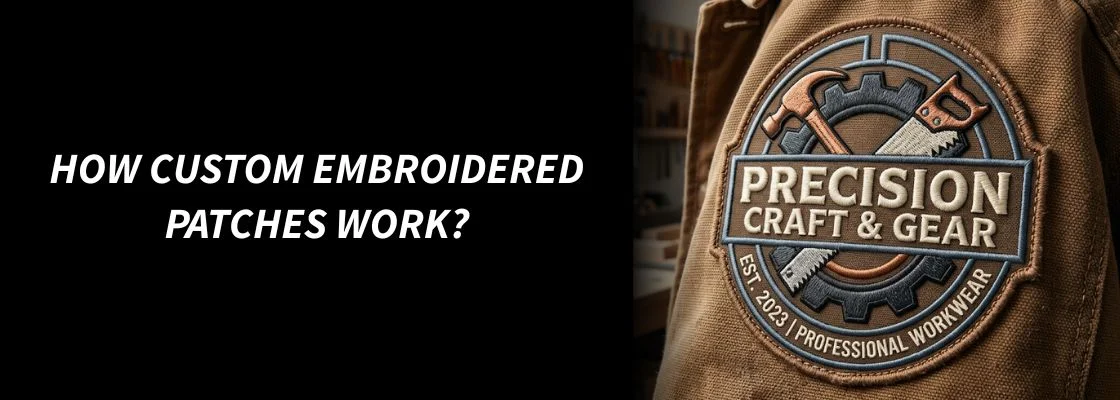
At this point you begin to compare options and learn what goes into making patches. Custom patches are made from thread bottom stitch on a base fabric using a machine that reads your artwork as a digital file and stitches it as per your specified design.
The overall simple process consists of several steps:
- You send your design
- The computer/machine converts your design to a stitch file
- The stitch machine uses the stitch file to build your patch on a base fabric
- The patch is then cut and finished
- Your patch is ready to be used soon after you have completed your order
New buyers typically feel confused about different choices at this stage as they may juggle between various choices and are unable to pick one design for their use. For example, one buyer described his concerns as:
“I thought the patch was printed until I checked it up close. Upon closer inspection, I saw all the parts of the patch were made from thread.’’
Embroidered patches are made differently than printed designs. The end product is more durable and has a textured appearance.
Types of Custom Embroidered Patches
Types of custom embroidered patches help consumers make better choices:
Types | Best Uses | Simple Benefits |
Flat Embroidery | Logos, uniforms | Clean and simple look |
3D Puff Embroidery | Caps, fashion wear | Raised and bold design |
Merrow Edge | Classic style | Strong border finish |
Die Cut Shapes | Creative branding | Custom shapes possible |
For hats and streetwear, many clothing brands choose to use 3D puff embroidery since it gives off a premium look.
What You Must Check Before Ordering?
At the final stage, buyers usually decide where to order. This is where small mistakes can cause big problems.
1. Check Design Quality
The design should use a high-resolution and clear design. A low-resolution image will result in a completely different final product than what is shown in the image.
2. Choose Right Size
The size of your patch alters how others perceive it. As a general guideline:
- Caps = Small
- Shirts = Medium
- Jackets = Large
3. Pick the Right Backing
The backing defines how the patch will attach to the garment.
- Iron-on = Easy to apply at home
- Sew-on = Durable and long lasting
- Velcro = Removable for uniform application
4. Always Ask for Proof
Digital proofs show how your patch looks after production.
A production representative stated, “Although customers are often provided with similar proofs, it is usually too late to make any changes once they have been approved.”
Real Uses of Custom Embroidered Patches
People use patches in many real-life situations:
- School issues for student identification
- Uniform issues to promote team pride
- Motorcycle clubs to identify members of the club
- Independent designers who wish to utilize patches in their clothing collections
- Business owners who issue employee uniforms
- Event planners who want to create promotional items to giveaway to participants
A representative from a local team noted,
“When you see everyone on the team wearing an embroidered patch on their jersey, it gives you a sense of togetherness.”
Factually, patches also form group connections.
Simple Comparison With Other Options
Features | Embroidered | Printed Patches | PVC Patches |
Look | Textured | Flat | Plastic-like |
Durability | High | Medium | Very high |
Cost | Medium | Low | High |
Best for | Clothing | Events | Outdoor use |
Common Mistakes People Make
Many people make repeated errors when they order custom embroidery patches, such as the following:
- Sending in a logo that is too small
- Wrong size of patch
- Choosing a backing that is not appropriate
- Not checking sample patches prior to production.
- Ordering too many
Here is one example from an owner of a small business: “We had to have a second order placed because our first order had been too small for jackets. We failed to check the size of the patch prior to placing an order.”
More effective planning on your part could have prevented these issues.

Why Businesses Still Choose Embroidered Patches?
With a custom embroidered patch, you’ll have a physical item that represents your design concepts. They work great for personal or business purposes, and provide a combination of inexpensive, stylish and durable products.
Final Thoughts
The success of your embroidered patch is directly related to your understanding of how you want to use it, selecting the right kind of patch and double-checking your patch design, prior to placing an order. A well-made embroidered patch will improve the appearance of any piece of clothing, while also establishing an individual and lasting identity. At Quality patches, we take care of all your needs and design durable embroidered patches for you and your business.
FAQs
Are embroidered patches washable?
Yes, most of the embroidered patches can be washed easily.
Do embroidered patches fade over time?
Yes surely. The colours of embroidered patches may fade over time as they are more exposed to UV radiation. Secondly, regular harsh machine wash can also cause them to lighten.
Can I use embroidered patches on any fabric?
Embroidered patches can be applied to almost all types of fabrics such as cotton, denim etc. They are the best even for military uniforms.
How long does production take?
Lead times for production will vary based on both the size of the order and the complexity of the design. But generally speaking it will take between three days and two weeks.