 Skip to content

What Happens to Patch Quality After Repeated Washing and Wear?
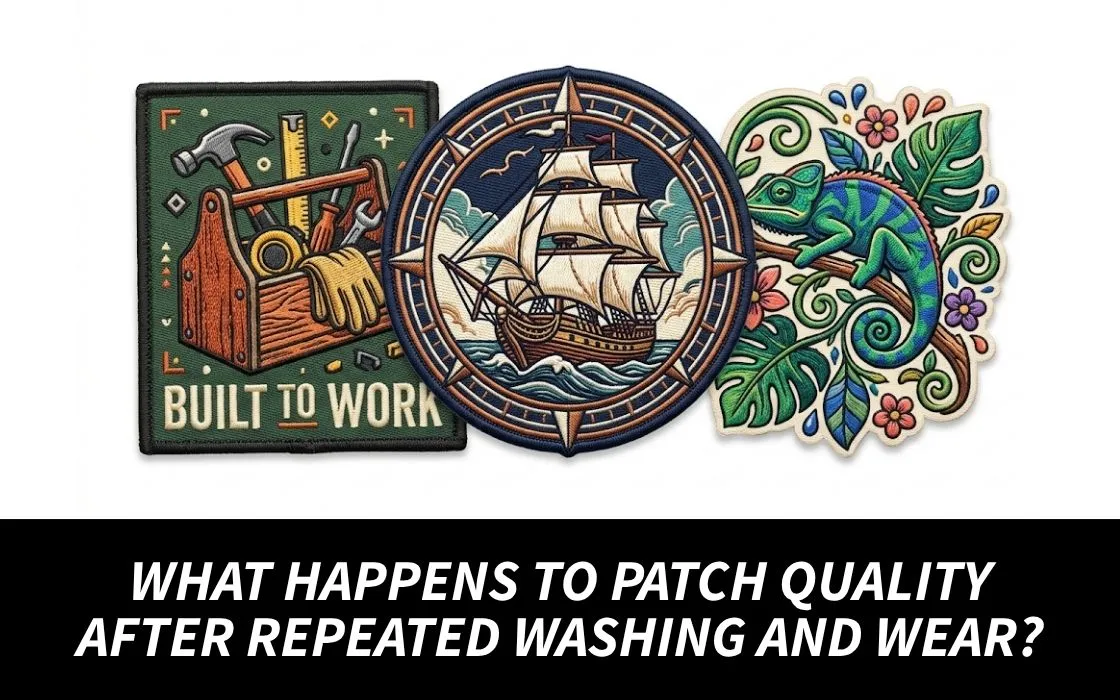
The newly created patch will appear new and beautiful right after it reaches you. However, it will be affected by several processes such as washing, drying, friction, sunlight, and wearing. The iron-on patch will especially suffer from this process since its adhesive layer will lose its strength over time.
This certainly does not mean that a quality patch will soon start to fall to pieces, since the durability of the patch depends on the material of the patch itself, the technique of its stitching, backing, method of fixing it onto the garment and other factors.
For instance, qualitypatches.com presents its embroidered patches as durable and suggests various backings for the patches such as sew-on, iron-on patches, peel-and-stick, and Velcro.
But what will happen after several washes?

Does Washing Damage Custom Patches?
The biggest problems usually appear in different forms depending on the patch and backing.
What Do You Notice? | What May Cause It? |
Faded-looking Colors | Heat, chemicals, sunlight, or repeated friction |
Loose Threads | Abrasion or aggressive washing |
Frayed Edges | Friction or damaged border stitching |
Lifted Corners | Weakening adhesive on heat-seal patches |
Flattened Texture | Heat or pressure on raised designs |
Reduced Velcro Grip | Lint and debris filling the hook-and-loop surface |
What Happens to Embroidered Patches After Repeated Washing?
Embroidered patches are capable of surviving through regular washes provided that they have been sewed well. On the other hand, durability does not necessarily mean that embroidery is incapable of getting any harm done to it. Continuous friction is what causes the harm in time.
One real-life example is a work jacket used every few days of the week. The patch will stay intact after many washing cycles, but the garment itself will start to look worn out at around the same time.
Does Iron-On Backing Wear Out Faster?
There is need to give more attention to iron-on patches because it is the glue that does the bulk of the attachment work. Although the heat-seal backing may offer great adhesion strength, there is always some recommended way of washing the fabric.
What About Sew-On Patches?
The sew-on method does not depend on any adhesion for the patch to stay in place. The patch will retain its hold since it is attached to the garment through the use of threads. This type of patch will be suitable for uniforms and working garments. It will be useful for jackets as well as other clothes that undergo frequent washing.
How Should You Wash Clothes With Custom Patches?
Before you wash
Flip the item inside out. This keeps the patch from taking as much direct rubbing in the wash. Also zip or close any hook and loop pieces on other clothes. Their texture can snag embroidery.
While washing:
- Water should be cold or lukewarm.
- Select a delicate cycle.
- If not specified by the care label on the garment, use a gentle detergent.
- Most patch manufacturers recommend washing embroidered patches in temperatures not higher than 40°C, which is equivalent to 104°F. Moreover, they recommend no bleach and refrain from rubbing.
- For iron-on patches, consult the manufacturer’s guidelines regarding washing since too much heat may impair the adhesive properties.
After the wash
Dry in the air where possible since drying in the dryer may damage the adhesive and decorative elements.
What Washing Mistakes Cause the Most Patch Damage?
- Do not wash the iron-on patches immediately after applying them.
- While washing clothes, always make sure you use the right temperature indicated in the care guide and never go your own way.
- Do not treat the item with bleach or anything that may cause fading of the color.
- Do not scrub with a hard brush on the surface of the patch but make sure you clean it softly. In case the care instruction states that you need to apply heat-sensitive backing, do not apply high temperatures when drying the garment.
- Do not forget to remove the Velcro patches before you wash the garment unless stated on the label. Finally, do not iron over embroidered items.
Can Daily Wear Damage a Patch Even Without Washing?
When one is wearing a work jacket, the patch comes into contact with car seats, tools, bags, desks, straps, and even clothes. In case the patch is to be used outdoors, it will come into contact with sun, rain, dirt, heat, and cold wind.
Chenille’s raised and soft texture can flatten a bit after constant rubbing, or if you clean it in a way that does not fit the material. It is important to choose the best patch based upon the manner in which you are going to be using the garment.
How Can You Make Custom Patches Last Longer?
Start with the use case before choosing the patch construction.
If the garment is going to be subjected to continuous commercial washing, find out about the durability of the attachment method as well as the washing tests that have been conducted. For removable features, opt for the hook-and-loop type of fixing and remember to detach before washing. If you want to use patches that will be permanently fixed in place of clothes that are washed on a regular basis, using sew-on patches is your best option.
Where there are highly elaborate embroidered patches, ensure there is enough room for the letters and small details in the artwork.

When Should You Replace a Custom Patch?
It is not mandatory to change a patch just because it is no longer looking new.
Think about changing the patch when the name/logo/other information has faded and is unreadable, when there are major tears along the edges, when there have been repeated failures of attachment, or when the patch no longer truly represents the company/team.
As one example, a patch on an employee’s uniform that has a loose corner would be something to take care of before the entire patch comes off.
The Bottom Line: Washing Tests the Patch, But Care Shapes the Result
While all textile applications suffer gradually as a result of washing and wear, the rate will depend very much on the specifics regarding textile material and care. Embroidered patches can withstand the washing process, while the durability given to the patch depends mostly on the base layer used.
Heat-adhesive patches require a closer eye on temperature controls whilst washing, removable Velcro patches have to be separated from each other before washing, and sewn patches present a superb option for heavily-used clothing.
Qualitypatches.com can manufacture embroidered patches of the types above, along with other choices of materials and methods of attachment. Should your patch get washed often or subjected to heavy daily loads, make sure to specify the clothing type, washing process, and the purpose of the garment!