 Skip to content
The Rise of Textured Patches in Modern Streetwear
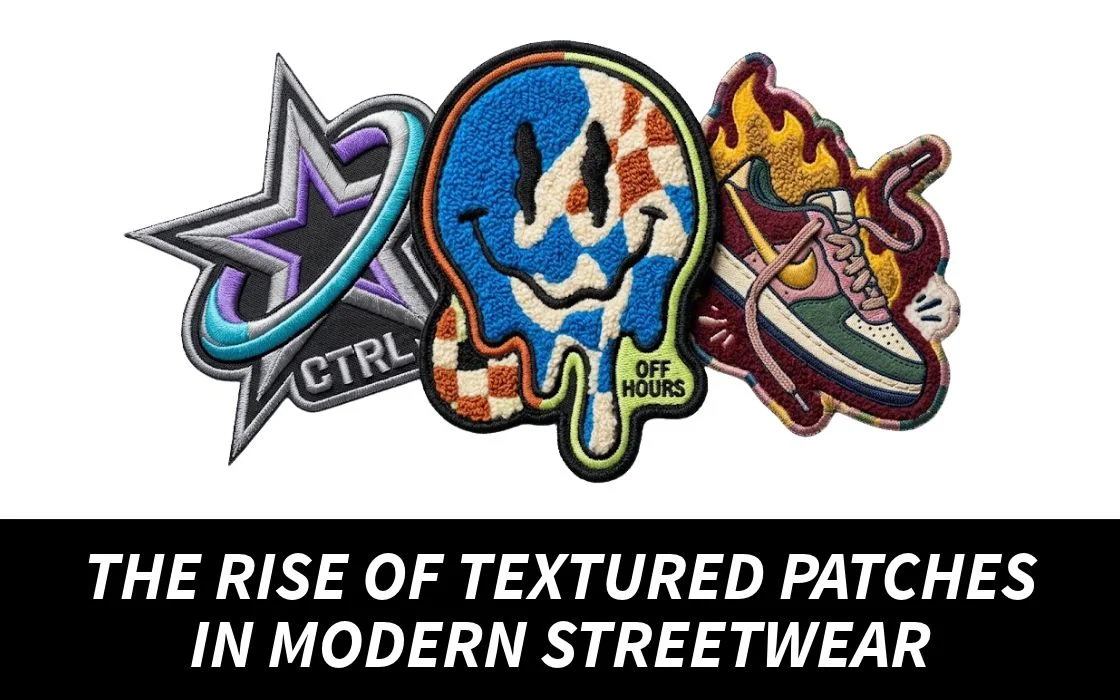
Streetwear has always let people make their clothes personal, but today, small details matter more than ever. This is how the textured patches in jackets, hoodies, jeans, bags, and other streetwear become evident.
While a printed graphic may only look good on an item of clothing, the use of textured patches allows you to give your design some three-dimensional quality and a texture that can be felt. Custom chenille patches, raised embroidery, puff embroidery, or multi-layered patches can all upgrade your jacket or hoodie while remaining true to the original design of the garment.
The current fashion trend reports also indicate a greater emphasis on luxurious surface details. For instance, Who What Wear’s fall 2026 trend report focuses on the fashion direction of this season through opulent embroidery and embellishment.

Why Are Textured Patches Becoming Popular?
While a flat embroidered patch relies on color, lettering, and stitching, a textured patch provides an additional visual element of yarn loops, raised stitching, and similar details. This makes the design appear more visible on an otherwise boring outfit.
Chenille is one of the best examples of the texture that makes a design appear more visible because of the raised looped yarn.
This particular fabric is often combined with embroidery to provide sharper design lines and finer details within the design.
This method is especially useful when designing streetwear clothing items that typically include oversized silhouette, neutral tones, vintage elements, and prominent details.
Instead of printing a design on the whole hoodie, a single patch could be put on the sleeve, pocket, back, or chest.
What Makes a Patch Look Textured?
All patches do not get the same look.
Custom chenille patches use raised loops made of yarn to make the surface appear soft and plush. This effect allows the use of letters and simple forms to have a very three-dimensional look; hence, its long connection with varsity jackets.
The puff embroidery technique also creates a raised effect through the creation of embroidery on a foam base.
The layered embroidery uses various embroidery stitches, fabrics, borders, and surfaces for the different elements of a single design.
Why Chenille Fits Modern Streetwear So Well?
One of the appealing aspects of custom chenille patches is the fact that there is already something people relate to in terms of its feel.
The fuzzy letter on the varsity jacket has a lot of visual history, but streetwear brands can repurpose the language of that history. The classic varsity lettering could be turned into a brand initial, while the school mascot could become a symbol for their musical venture, clothing drop, or gaming community.
According to Miami Digitizing in a 2026 guide, chenille is made up of loop-pile fabric which makes the patch have a plush feel. Typical patches usually have a thickness of about 2-3mm.
However, the physical thickness of chenille affects the way the patch will behave on the clothing. Chenille patches tend to be bulkier than most embroidered patches.
Are Textured Patches Only for Varsity Jackets?
No. Whereas chenille patches can fit naturally with varsity jackets, modern-day patch suppliers also showcase how they can be used in hoodies, jeans, bomber jackets, bags, and various streetwear items.
For instance, a streetwear brand can have a big chenille patch logo on the back of a thick jacket, an embroidered patch on a hoodie sleeve, or even a mixture of chenille and flat embroidery on jeans.
If you have a chenille patch, it would be better for a thick jacket, whereas an embroidered patch might do just fine for an everyday hoodie.
What Should You Consider Before Ordering Textured Patches?
Questions to ask yourself include:
- Is the design suitable for having raised texture?
- How detailed is the design?
- Where on the clothing will it be placed?
- What type of clothing is it going to be placed on?
- How will the patch be attached?

Do Textured Patches Actually Make Streetwear Look Better?
While texture does not mean a better patch it does revolutionize its design, and the final outcomes depend on how much the texture matches with the artwork, cloth, and overall style.
The difference impacts clients because adding too many elements even in the form of colors and material gives a feeling of congestion.
Textured patches strongly express their primary idea since it is about different prominent elements such as a big letter or symbol instead of focusing on tiny details that are too many in a digital picture.
The current streetwear works well for maintaining good work. You may create a mix of the old varsity style with modern logos or unusual lettering.
Where Is the Trend Heading?
The overall fashion trend indicates that surface design will continue to be important instead of fading away after one season. The Fall-2026 report has already pointed out the presence of elaborate embroidery, decorated garments, and other tactile elements in the collections and the street looks.
In terms of streetwear, this means going beyond the basic flat logo patch. The brands can make use of custom chenille patches, embroidery patches, puffing, combined textile techniques, etc. This makes all the products visually appealing and memorable for people in a touchable way. On the other hand there must be a common purpose behind texture addition.
Wrapping Up
Textured patches can turn simple streetwear into something more unique. From soft chenille to detailed embroidery, the right texture adds depth, character, and a stronger visual identity.
Planning a custom patch for your next streetwear piece? Explore our custom patch options at qualitypatches.com and create a design that stands out from the crowd.
Frequently Asked Questions
Are textured patches good for streetwear?
Yes. Textured patches are particularly suitable for streetwear styles, as elevated textures help to give clothing a sense of depth, difference, and an aged or top-end aesthetic.
What is the most popular textured patch style?
Chenille is the best-known style due to the raised plush texture that connects chenille directly with varsity and vintage apparel, as well as more modern streetwear.
Can chenille patches include small details?
They can show some other embroidery or chain stitch detailing, but generally, chenille is more suitable for bigger patterns and designs.
Where can you put textured patches?
Textured patches can be applied to the front, back, and sleeves of jackets, hoodies, jeans, bags, and various clothes. But the correct size and backing of the patch should be according to the material and placement.