 Skip to content
Custom Made Patches: Styles, Materials, and Tips to Elevate Your Apparel Design
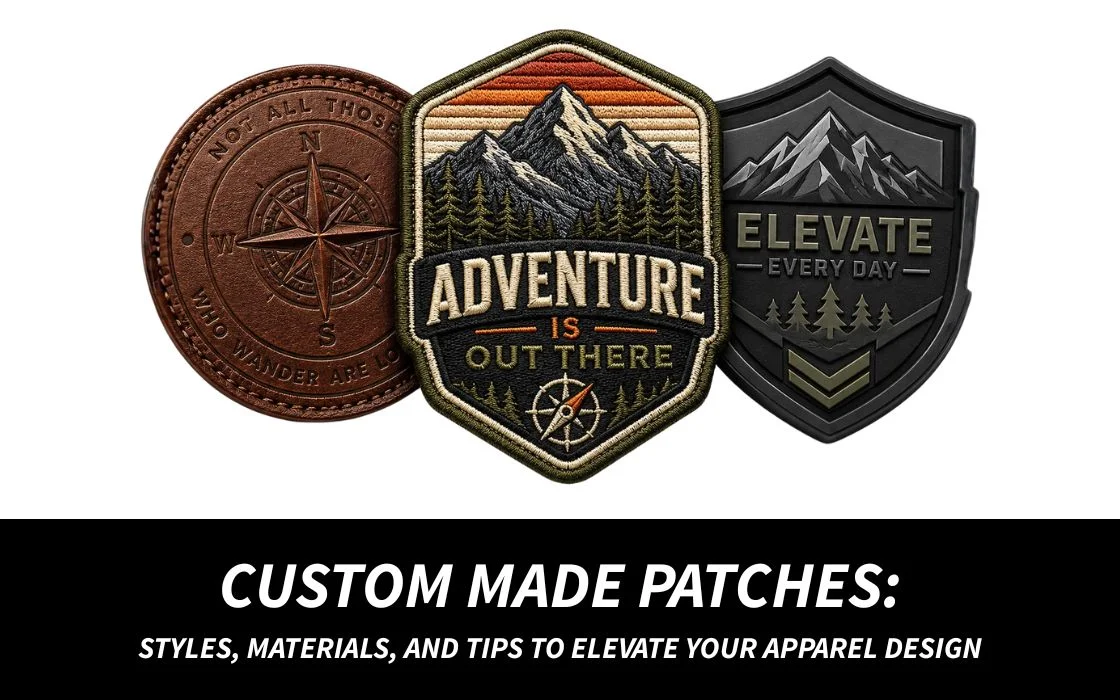
Custom made patches have been used for decades. They have been on military uniforms, letterman jackets, and club apparel. They are currently being used for fashion and branding in everyday life. So, in the current times, custom patches for clothing still stand alone!
Patches are a good choice because they are easy to use. You can add patches to a plain piece of clothing. It is wiser to know that custom made patches serve different purposes for a simple cloth, for a sports team or for your own clothes. The choice of a custom made patch depends on various styles and materials.
What Are Custom Made Patches?
A custom made patch is a small patch of material that has a logo, text or graphic. It is printed on to a garment. It can be used on many items, replaced when it gets worn out, or moved from one garment to another.
Patches are many times used on jackets, hats, bags, uniforms, and promotional products. Businesses use patches as a way to market themselves. Individuals use patches as an easy way to personalize their regular wear.

Understanding the Different Patch Styles
- An embroidered patch typically has a classic stitched look as well as a more prominent surface. They are designed to display bold designs without much detail.
- Woven patches are flatter and smoother than embroidered patches. Their thinner thread allows them to hold more detail.
- PVC patches are rubber-like in appearance. They are modern and water and abrasion-resistant.
- Chenille patches provide a fuzzy, soft texture and are typically used on jackets. They help in making a bold and clear statement on your clothes.
- Printed patches can produce full-color and high-detail artwork. They are usually the better choice for printed art that uses gradients or small details.
The choice of custom patches for clothing is not a matter of which is the better style of patch but rather which style will best fit your design and the purpose.
Materials Matter More Than You Think
Most commonly, patches are made from fabric-based materials. Felt is typically used to create softer patches that have more of a traditional finishing.
When thinking about the types of thread to use, polyester threads tend to be the most popular for embroideries. Whereas, cotton threads have a nice natural look but may lose their color more quickly.
PVC threads are designed to last, are permanently waterproof, and cannot be altered by being worn in more extreme environments.
For choosing a patch based upon the cost and material properties, it will depend on how you are going to use the patch. However, based upon the performance of this particular fabric will depend upon how often it will be used throughout daily activities.
Picking the Right Style and Material for Your Needs
Ever thought about why you need a custom made patch or why is it useful? Before choosing one, it is better to know its usefulness beforehand. If you choose embroidered or woven patches for everyday wear, you have made the right choice!
For outdoor usage, PVC patches are better. They can withstand severe weather conditions, heat, and moisture. Don’t opt for any other type if you are going out!
Your budget can also play a major role when it comes to picking the right style and material. However, choosing simpler designs or regular shapes will typically yield lower production costs.
Simple Design Tips That Make a Big Difference
Design Element | What to Focus On | Why Does It Matters? |
Simplicity | Design should be clean and simple | Simple designs are easier to identify |
Clarity | Design should be easy to identify at first glance | Readability is improved |
Color Contrast | Use any two or more contrasting colors | Provide great visibility |
Size & Placement | Designs should look balanced and not overcrowded or too small. | The patch will look balanced |
Brand Consistency | The design must be created using the same colors, fonts, and overall style | To build recognition over time and create a brand identity |
How to Attach Your Custom Patches for clothing?
- Sewing Sew-On Patches
Stitch your patch onto the garment by hand or by a sewing machine.
- Using Iron-On Patches
For an iron-on patch, apply it to the garment applying heat with your iron.
- Using Velcro Patches
Sew or attach the Velcro backing to the garment then press the patch onto the fabric.
- Using Fabric Glue
Fabric glue can be used on fabrics that are suitable for use with fabric glue.
- Using the Heat Press Application
A heat press provides a stronger and more professional quality bond than a standard iron.
Tip – Always check the type of fabric the garment and type patch before using.

Common Mistakes to Watch Out For
- One of the most common mistakes is adding too much detail into too small of a space. Use little detail in such a scenario.
- Another common issue is not selecting the proper type of material for the intended use. Before selecting a custom patch, know the material and its quality.
- Application mistakes can also create problems. Not enough heat when applying an iron-on patch. Stitching pattern and distance differences from patch to patch will lead to edge lift after some time.
Wrapping Up
Custom made patches are an easy way to beautify your clothes in a unique manner. Select a style that matches your design properly, choose the correct fabric as you need, and then apply your new patch with care. All these aspects are vital so that you choose the right patch for the right reason and don’t make a mistake!
Once everything is working together, the patch is no longer just an accessory; it will be seen as a part of the overall identity of the garment to which it is attached. At quality patches, we manufacture the best custom patches for clothing!