 Skip to content
What Goes Into a Good Custom Military Patch (It’s More Than Design)
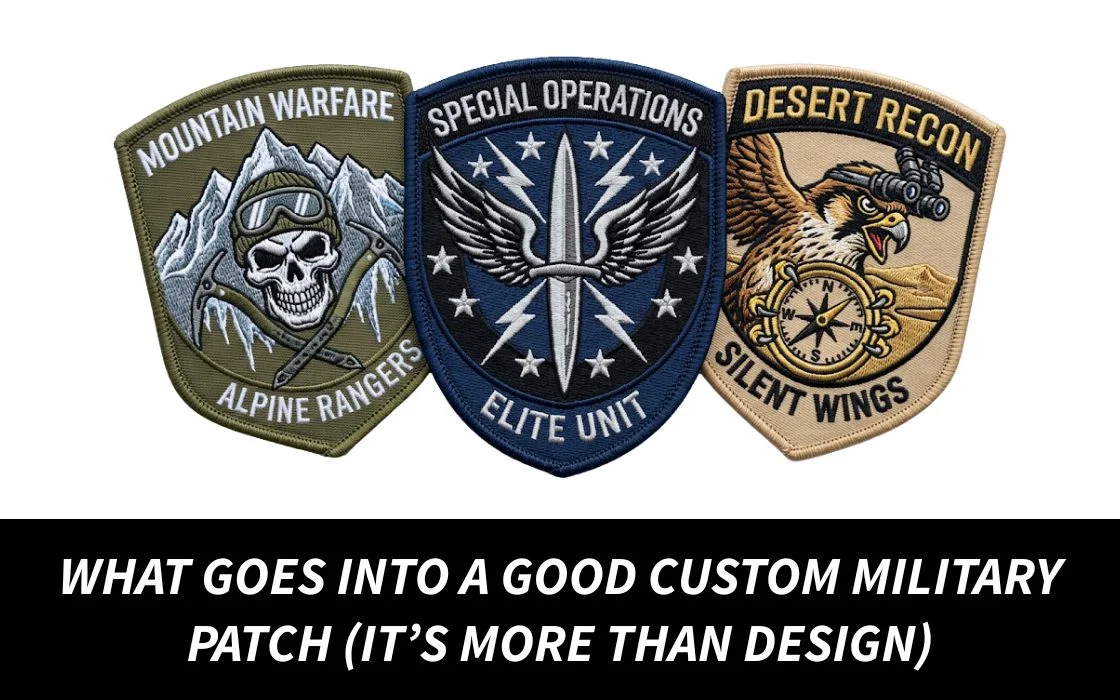
At first, it feels simple.
You think, okay… it’s just a patch. Pick a design, add some color, send it for production. Done.
But once you actually go through the process, you realize it’s not that straightforward. Some patches come out looking solid, clean, and purposeful. Others… look fine on screen, but in real life something feels off. Not wrong exactly, just not right either.
And that difference usually comes from things people don’t think about early on.
Because a good custom military patch isn’t just about design. It’s about how everything comes together… the use, the material, the structure, even the meaning behind it.

It Starts With Purpose, Not Design
Most people jump straight into visuals. Logo, colors, layout. That’s the fun part, so it makes sense.
But the better starting point is asking a simple question… what is this patch actually for?
Is it going on tactical gear? A uniform? Something for an event? Or is it more for branding?
Because that answer changes everything.
A patch meant for real-world use needs to hold up under pressure. One meant for merch can focus more on detail and finish. If you skip this step and go straight into design, you might end up with something that looks good but doesn’t really work where it’s supposed to.
Material Isn’t Just a Choice… It Sets the Tone
Once the purpose is clear, material becomes the next big decision.
And yeah, not all patches are built the same.
Embroidered patches feel classic. They’ve got texture, a bit of depth, that traditional look people recognize instantly. Woven patches are cleaner and better for detail, but flatter. Then you’ve got PVC, which feels more modern… smooth, slightly raised, and built to handle rough use.
For military-style patches, durability usually matters more, so PVC or high-quality embroidery tends to work better.
If you’re not sure which way to go, it helps to explore different options before locking anything in. You can always check out custom military patches and see what actually fits your use instead of guessing.
Durability Is Kind of the Whole Point
Here’s the thing.
Military patches carry an expectation. Even if you’re using them for branding, people still expect them to feel tough.
Not delicate. Not temporary.
Cheap materials ruin that fast. Threads loosen, edges start fraying, colors lose their sharpness. And once that happens, the patch doesn’t just look bad… it loses that solid, reliable feel.
A good patch holds its shape. It stays clean even after use. It looks the same weeks or months later.
That consistency matters more than people expect.
Design Still Matters… Just Not the Way You Think
Design is important, yeah. But not because it needs to be complex.
Actually, it’s usually the opposite.
The patches that look best are the ones that keep things simple. Strong shapes, clear lines, nothing overcrowded.
Because patches aren’t viewed like screens. People don’t zoom in. They glance.
If your design only works when someone looks closely, it’s not going to hit the same way in real use.
Clean always wins here.
Size and Shape Change Everything
This is one of those details that seems small but makes a big difference.
A design that looks perfect at one size can fall apart when scaled down. Text gets cramped. Details get lost.
Same with shape.
Standard shapes work, sure. But sometimes a custom shape that follows the design feels more natural. Less boxed in.
It’s not about being different for the sake of it. Just making sure the patch fits where it’s going… visually and physically.
Backing Isn’t Just Technical… It Affects Real Use
A lot of people overlook this.
They focus on how the patch looks, not how it attaches.
But that choice changes how practical it is.
Velcro is usually the go-to for military-style patches. Easy to remove, easy to swap, doesn’t damage the gear. Sew-on is more permanent. Iron-on… not really ideal for heavy use.
So yeah, this isn’t just a technical detail. It affects how the patch actually works day to day.
If you’re planning something functional, you can create custom patches here with the right backing so it fits your use properly.
Stitching and Finishing Are Where You See the Difference
You can have a great concept.
But if the execution is off, it shows immediately.
Good patches feel tight and clean. Stitching is consistent. Edges are smooth. Everything looks intentional.
Bad ones feel rough. Uneven. Like something rushed.
And the thing is… people notice this without even thinking about it. It just changes how the patch feels overall.
Color Should Match Use, Not Just Preference
It’s tempting to go with whatever looks best on screen.
But with military-style patches, color usually serves a purpose too.
Muted tones, tactical shades… they’re not just aesthetic choices. They fit the environment the patch is used in.
Bright colors can work, but only if they make sense for the context.
So again, it comes back to purpose.
A Good Patch Feels Like It Belongs
This is hard to explain, but it’s real.
Some patches just feel right. Like they were always meant to be there.
Others feel added on. Like an afterthought.
That difference usually comes from how well everything aligns… design, size, material, color.
When those things match, the patch feels natural. When they don’t, it stands out in the wrong way.
Meaning Gives It Weight
Military patches usually represent something. A unit, a role, a group.
Even outside the military, that idea carries over.
A patch with meaning behind it feels stronger. More intentional.
People connect with it more.
Without that, it’s just decoration.
And decoration doesn’t stick the same way.
The Right Manufacturer Makes It Easier
You can plan everything right and still end up with a bad result if the execution isn’t there.
That’s why who you work with matters.
A good manufacturer won’t just produce your design. They’ll guide you… adjust details, suggest better options, help you avoid mistakes.
If you want to skip the trial-and-error phase, you can get high-quality custom military patches made here and make sure the final product actually matches what you had in mind.

So… What Really Makes a Good Patch?
It’s not one thing.
It’s a mix of decisions done right.
Clear purpose. The right material. Clean design. Proper size. Strong backing. Solid finishing. And a bit of meaning behind it.
Miss a few of these, and the patch might still be okay.
Miss most of them, and yeah… it shows.
Final Thoughts
A good custom military patch isn’t just about how it looks on a screen.
It’s about how it feels in real life. How it holds up. How it fits into what it’s meant for.
That’s what separates something average from something that actually feels right.
So if you’re planning one, don’t just focus on design.
Think about the whole picture.
Because the small details? Those are the ones people end up noticing the most.
FAQs
What is the best material for military patches?
PVC and high-quality embroidery are the most common. PVC is more durable, while embroidery gives a classic look.
Are Velcro patches better for military use?
Yeah, they’re more practical. Easy to remove, easy to swap, and they don’t damage the gear.
How long do custom military patches last?
With good quality, they can last for years, even with regular use.
Can I use detailed designs on military patches?
You can, but simpler designs usually work better. They’re easier to read and look cleaner from a distance.
What size is best for military patches?
Most fall between 2 to 4 inches, but it really depends on where you’re placing them.
Are military patches only for military use?
No, they’re used for branding, teams, and events as well.
Where can I get custom military patches made?
Look for a provider that focuses on durability and clean finishing. Quality Patches is a solid option if you want something that actually holds up.