 Skip to content
The Truth About Embroidered Patches No One Mentions
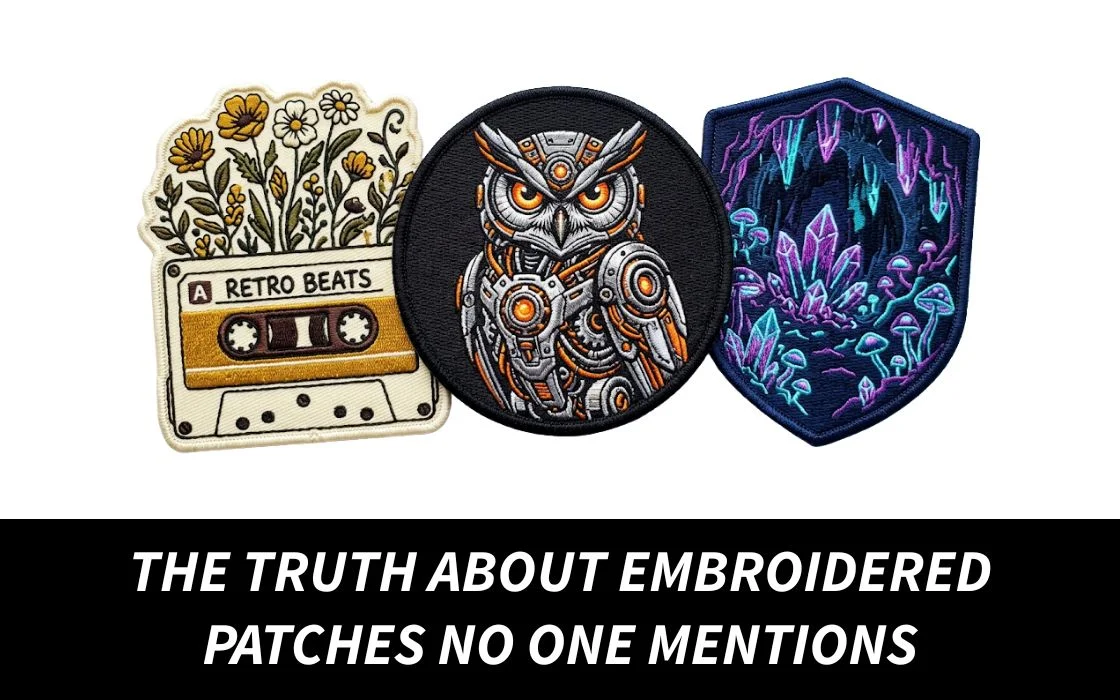
Embroidered patches look simple.
Pick a design. Add some thread. Done. That’s how it feels at least.
But once you actually start working with them… for a brand, merch, uniforms, anything… you realize pretty quickly… it’s not that straightforward.
There are things people don’t tell you upfront. Not because they’re hiding it, but because most only notice after they’ve already ordered.
And by then, yeah… it’s a bit late. So let’s just say it how it is.

Not Every Design Works (Even If It Looks Perfect on Screen)
This is probably the biggest one. You might have a clean logo. Looks sharp digitally. Everything aligned, detailed, nice.
Then it gets turned into embroidery.
And suddenly… it feels off. Lines look thicker. Small text disappears. Fine details blur together.
That’s because thread has limits.
You’re not working with pixels anymore. You’re working with actual stitches. And stitches can only go so small, so precise.
So yeah, some designs need adjusting. Simplifying. Cleaning up. If you skip that step, the final patch won’t match what you had in mind.
More Detail Doesn’t Mean Better
This one trips people up. You think adding more detail makes it look premium. It usually does the opposite.
Too much going on = messy embroidery.
Threads overlap. Colors clash. Shapes lose definition. The best embroidered patches? They’re clean. Bold shapes. Clear lines. Enough space to breathe.
It’s less about cramming everything in… more about making what’s there look right.
Thread Color Isn’t Always Exact
Another thing people don’t expect. You pick a specific color for your brand. Let’s say a certain shade of blue. Then the patch comes in… and it’s close, but not exact.
That’s normal.
Thread colors don’t match digital color codes perfectly. There’s always a bit of variation. Good manufacturers get very close. Cheap ones? Not so much. So if color accuracy matters to your brand, this is something to pay attention to early on.
Cheap Embroidery Is Easy to Spot
You don’t need to be an expert.
You can just… tell.
Loose threads. Uneven stitching. Gaps where there shouldn’t be any. Edges that feel rough. Even if someone doesn’t say it, they notice it.
And that reflects on your brand. A well-made patch feels solid. Tight stitching. Clean edges. Consistent design.
That difference? It’s obvious in real life.
If you want patches that actually come out clean, it’s worth going with custom embroidered patches that focus on quality instead of just pushing volume.
Backing Matters More Than You Think
People usually focus on the front. Makes sense.
But the back? Just as important.
You’ve got options:
- Iron-on
- Sew-on
- Velcro
- Adhesive
Each works differently.
Iron-on is convenient but depends on good adhesive.
Sew-on is more secure but takes effort.
Velcro is flexible but not always needed.
Choosing the wrong backing can make a good patch annoying to use. So yeah, this part matters more than people expect.
Size Changes Everything
A design that looks great at 4 inches… might not work at 2 inches.
Details get tighter. Text shrinks. Shapes lose clarity. That’s why resizing isn’t just scaling down.
It often needs redesigning slightly to fit the new size. Skipping that step? That’s how you end up with patches that look cramped or hard to read.
They’re Durable… But Not Indestructible
People sometimes assume embroidered patches last forever.
They last long, yeah. But only if they’re made properly. Cheap thread fades. Weak stitching loosens. Edges start fraying.
And once that starts, it doesn’t get better. Quality patches hold up. They survive washes, wear, time.
Bad ones? They don’t. Simple as that.
They Feel Different Than Printed Designs (In a Good Way)
Here’s something positive.
Embroidered patches have texture. You can feel them. Raised threads. Slight depth. A bit of structure.
Printed patches might show more detail, but they feel flat. Embroidery gives that “real” feel people like.
That’s why they’re still popular. They don’t just look like a design… they feel like one.

Production Isn’t Always Instant
Another thing people underestimate.
Good patches take time. Digitizing the design. Setting up stitching paths. Sampling. Production.
If someone promises super fast turnaround at very low cost… yeah, there’s usually a trade-off.
Rushed work shows.
So if you’re planning ahead, give yourself some buffer time. It makes a difference in the final result.
The Right Manufacturer Changes Everything
You can have a great design. But if the execution is poor, none of that matters. That’s why who you work with matters a lot.
Someone experienced will:
- Adjust your design properly
- Guide you on size and detail
- Recommend the right backing
- Deliver consistent quality
Without that, you’re kind of guessing.
If you want to avoid that whole trial-and-error phase, you can create your embroidered patches here and get guidance along the way instead of figuring it out alone.
So… What’s the Truth?
It’s this:
Embroidered patches aren’t complicated… but they’re easy to get wrong.
Small mistakes show up fast.
- Too much detail
- Wrong size
- Poor stitching
- Cheap materials
Individually, minor issues.
Together? They ruin the whole look.
Wrap up!
Embroidered patches still work. That hasn’t changed.
But getting them right takes a bit more thought than most people expect.
You don’t need to overcomplicate it.
Just:
- Keep the design clean
- Respect the limits of embroidery
- Focus on quality
- Work with the right people
That’s it.
If you’re planning to create something that actually looks good in real life… not just on screen… you can always get high-quality embroidered patches made here and make sure everything comes out the way it should.
Because once it’s made… that’s what people see.
FAQs
Are embroidered patches better than other types?
Depends on what you want. They’re great for texture and durability. If your design is simple and bold, they usually work really well.
Why does my design look different on a patch?
Because embroidery uses thread, not pixels. Some details need to be simplified to look clean when stitched.
What’s the best size for embroidered patches?
Usually between 2 to 4 inches. Smaller than that can lose detail. Bigger works too, but depends on where you’re placing it.
Are iron-on patches reliable?
They can be, but quality matters. Good adhesive works fine. For long-term use, sewing is still the safest option.
How long do embroidered patches last?
With good quality, a long time. They can handle regular wear and washing without major issues.
Can I use detailed logos?
You can, but they might need adjustment. Very fine details don’t translate well into stitching.
Where can I get good embroidered patches made?
Look for a provider that focuses on detail and finishing, not just cheap pricing. Quality Patches is a solid option if you want something that actually looks clean and lasts.