 Skip to content
How to Order Custom Lapel Pins: Materials, Design Process, and Cost Factors Explained
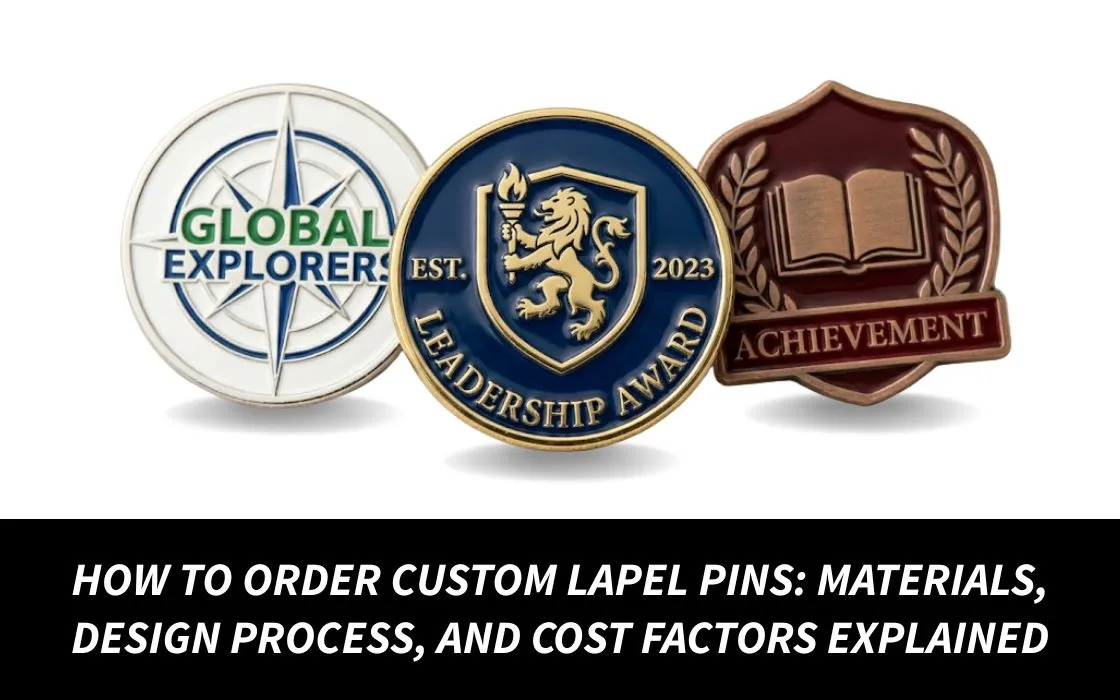
By 2026, lapel pins are more than just “swag.” They serve as physical anchors to support an organization’s digital brand strategy and highlight the corporate identity, within both the physical environment and the virtual world.
The corporate gifting industry, valued at $1.24 trillion is growing, and in response to the challenge of “remote work invisibility,” organizations are looking to wearable items to ease communication in the virtual world. In the light of this contemporary pattern, traditional pin designs are losing their usefulness.
Today’s brands place a higher value on purpose-driven, significant designs, which provide memorable reminders of a company’s achievements, community, or shared values.

Materials & Construction: Choosing Your Canvas
Understanding how custom lapel pins production works will help you choose a prime quality and stylish product. The varieties of materials include:
- Hard Enamel – Considered the highest quality pin, hard enamel pins are smooth with a flat surface and are made from jewelry-grade Gold or Silver. Hard enamel material shows durability and is suitable for executive branding.
- Soft Enamel – These pins have dipped paint, giving them a textured feel, and can be used with lively colors or as collectible items, like “Pop Mart” pins.
- Die Struck (Metal Only) – Super simple look in metal offers a very simple look.
Eco-Metal Standard (Trend for 2026) – Many Brands are upgrading their pin production processes with recycled metals from Zinc/Iron. The combination of VOC-free and water based enamel meets ESG (environmental, social, and governance) goals. So, both types of material become sources of delight and turn out to be guilt-free for Eco-conscious buyers!
The right material for your lapel pins impacts style, endurance, and brand image, making your pins not only memorable but a means of sustainability in 2026.
The “Physical” Pin: Bridging Physical and Digital
Unlocking ROI with NFC and QR Integration
Lots of people will tell you that a custom lapel pins is just for a decorative accessory. However, pins can be more than an accessory, they can link to the digital space as well.
You can attach an NFC tag to each pin, which calls for quick one-tap check-in to events or rapid access to web pages or apps. You could also place hidden QR codes on the back of each pin. Therefore, this will direct your customers to videos, promotions, or unique content.
These pins which link physical and digital items increase customer engagement, as well as create measurable impact. In fact, physical merchandise increases engagement than static merchandise.
By adding these two items to your lapel pins you can take a simple pin and convert that pin to an influential means for marketing and tracking.
Kinetic Design: Movement as a Brand Experience
Nowadays, brands use kinetic pins, which include spinners, sliders, and hinged designs. They go beyond simply being fun.
In fact, they can help employees stay engaged during online meetings and during long working hours by providing a solid sensory experience.
As well as being fun, they serve as wellness tools that can help relieve stress and improve focus.
Movement in pins is now being used by brands to create memorable experiences, so all lapel pins have now become an interactive mini-marketing experience.
Anatomy of the Pin: Backings & Modern Finishes
Modern pins have moved beyond just gold and silver plating. 2026 will bring a new trend of black nickel and a matte versus shine finish. So, for a glossy modern appearance, use matte black metal with high-gloss enamel!
Pins are now using magnetic backings instead of butterfly clutches. This is most useful for delicate fabrics such as designer blazers. The rise of “Brooch Core” is trending these days.
The new backing styles are not just for the purpose of wearing a fashionable pin, but they also improve the value and durability for premium branding campaigns.
Near-Shoring vs. Offshoring in 2026
Near-Shoring is desirable for prototyping because it allows for speedy supplies of smaller quantities of around 10 days and lowered carbon impact.
For instance, if a pin is being sourced for the U.S. it would be nicer to find a producer in Mexico, Turkey for the EU or another neighboring country.
Off-Shoring lets manufacturers produce very large quantities of pins. It usually takes nearly 8 weeks to receive deliveries due to shipping laws and international logistics from Southeast Asia as it is the main country of production.
As long as companies are choosing their manufacturing approach based on speed vs. size vs. sustainability, it becomes convenient to pick an economical strategy.
Cost Factors: Decoding the 2026 Quote
The following components have an impact on the cost of the custom lapel pins:
- Mold Fee: This is a single time fee for designing a custom die for the company.
- Volume Pricing: The more you order the less the price per piece (unit price). For example, a 50 pin order would cost $4.00 each but if you ordered 500 pins, the per pin cost is only $0.90.
- Sustainability Premium: Using Eco-Metal materials will add only 5-8% to your total cost depending on new recycling practices and efficiencies of scale.
In understanding these items, brands can plan for their budgets successfully and can prevent unexpected budgeting problems.
The Ordering Roadmap: From Brief to Unboxing
Step 1 – Submit Vector Artwork
Sending your pin design in a digital format is mandatory for accuracy in both design and production. Usually, vector files are typically ideal over raster files. Vector files offer details, color uniformity, and accurateness during the enamel fill, plating, and overall production processes. Vector files should come with clear color codes and layouts for exact representation of your design from the maker’s viewpoint.
Step 2 – 3D Digital Proof
The manufacturer will create a 3D digital mock-up before producing an actual version. The 3D digital visual symbol allows you to visualize your pin from all angles (color, metal outline, shape, etc.). At this point, you can request slight changes without experiencing any expenses relevant to manufacturing.
Step 3 – Physical Sample
A physical sample of your pin is meant to determine the size, enamel quality, plating finish, and backing type of your physical sample pin. It is vital to make sure your pins are up to your company’s branding standards and expectations.
Step 4 – Bulk Production & Delivery
After you approve the sample, the manufacturer will manufacture your complete order. Then, mail you your pins so you can utilize them.

Why Does This Roadmap Matters?
Following this series of steps will help guarantee that:
- Your pins are of premium quality
- Reduce the chances of errors
- Help to make it easy for you to create the final product aligning with your vision and branding mission.
To Wrap Up
Today, a lapel pin is more than just a small piece of jewelry. It can be used for branding purposes, to engage with customers, and to tell your company’s narrative. A good design will not only catch attention but also spark an interest in the company and its product. Moreover, the pins will act as digital keys because lapel pins can integrate NFC or QR code technologies.
Lapel pins can now reflect a company’s devotion to sustainability by using eco-metal and VOC-free enamels time after time. It shows customers’ that their companies are sensitive about the impact they have on the Earth.
Pins can have kinetic designs that create physical experience for users or be purpose driven pieces of art. In such a case, a custom lapel pins can communicate the company’s vision and communicate it in a meaningful manner.
Are you interested in designing a custom lapel pin that stands out? Contact us to get assistance with creating a design brief and in selection of materials, design options etc.