 Skip to content
A Guide to Biker Patch Placement: What Should Be on the Back, Front, and Sleeves
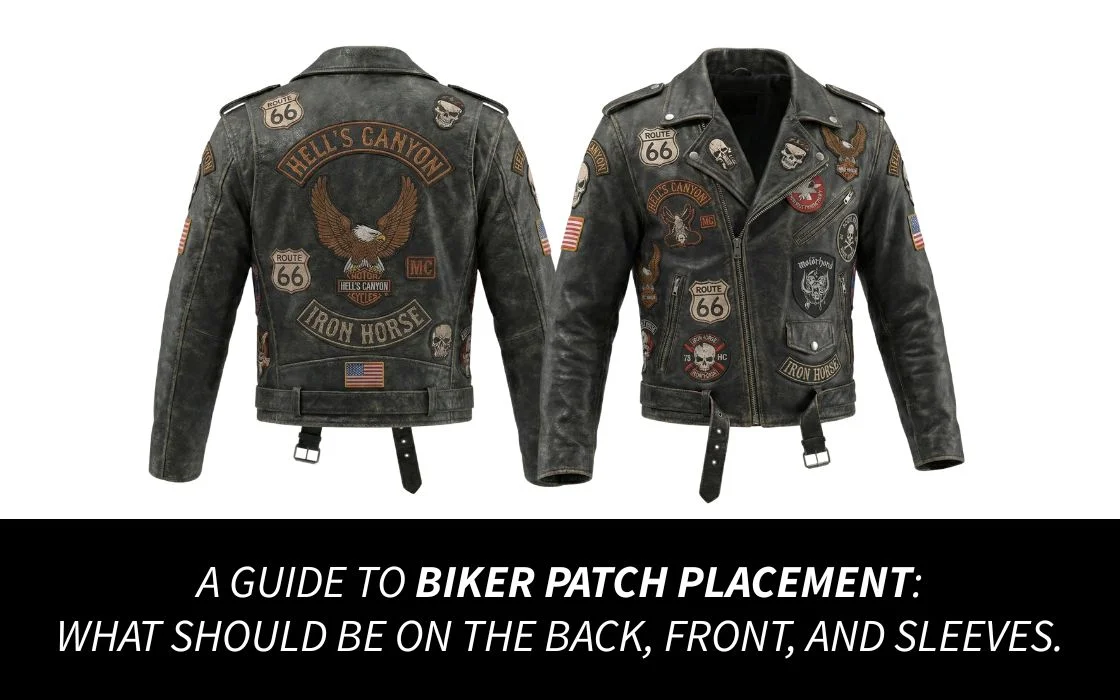
Identity, respect, and visual storytelling are the elements of motorcycle culture. Each patch on the vest or jacket of a rider carries a meaning. The positioning of the patch is equally important as the design. Riding alone, with a biking club, or just enjoying the style, knowing where to put the patches correctly will allow you to respect biker culture while creating a look that truly represents you. This detailed guide breaks down where patches belong, their meaning, and how to select the correct patches for your gear.
When done correctly, biker patches don’t just decorate a vest. They communicate history, loyalty, and personal milestones.
The importance of Patch Placement in Biker Culture.
Patch placement isn’t random. Traditional motorcycle culture has certain connotations that have certain positions attached to them. Misplacing a patch can unintentionally send the wrong message or, in some cases, cause offense. Even for non-club riders, knowing the rules helps you design a vest that looks authentic and respectful.
Good biker patches put in their right place give a statement of quality that will be instantly identifiable to every rider.

Back patch embroidery: The Heart of a Biker vest.
The greatest meaning is placed on the back of a biker vest. This space is the most common and prominent, hence it is the focus of the whole setup.
Top Rocker
The top rocker is over the shoulders. It is traditionally shown with the name of a club or a group. The rider is at once recognized by this curved patch. In the case of independent riders, they can have a personal phrase or nickname.
Center Patch
The biggest element on the back is the center patch. This normally has a logo, emblem, or symbol that denotes the identity of the club or the rider. Here, craftsmanship, bright colors, and sturdiness of support matter most, as it must endure.
Bottom Rocker
The bottom rocker, which is placed below the center patch, normally depicts the geographic territory. This may be a state, country, or region. It is one of the most revered placements in biker culture.
These three components combine to create what is often referred to as the traditional three-piece back patch design that is typical of clubs. Back designs of single pieces also tend to have the same visual balance.
Well-designed biker patches on the back instantly communicate authority, pride, and belonging.
If you’re planning a back patch that demands attention and respect, Quality Patches creates premium custom designs built to last on the open road.
Front Patch Placement: Subjective Personality and Hierarchy.
The front of a biker vest or jacket is bolder and individualistic. It enables riders to exchange personal accomplishments, functions, and character.
Name or Road Name Patch
This patch is usually positioned on the upper chest and will have the name or nickname of the rider. It makes it individual and assists in the establishment of personal recognition in the community.
Club or Brand Logo
A few riders have a smaller size of their key emblem on the front. This strengthens the identity without defeating the design.
Rank or Role Patch
Rank patches that are common with club officers include President, Vice President, or Road Captain. They tend to be put on the chest or a little bit lower so as to be seen.
Front placements enable innovativeness, yet moderation is paramount. Having too many items at the front may lead to a cluttered appearance of the vest and minimize the impact of each individual element.
The front biker patches must be stitched, durable, and readable because they face wind, vibration, and long rides.
Do you need sharp, readable chest patches that withstand real riding conditions? Quality Patches delivers durable craftsmanship that riders trust.
Placing Sleeve Patches: Storytelling in the Smallest Circle.
Sleeves are not compulsory but impressive storytellers. They are commonly employed for secondary information and accomplishments.
Event and Rally Patches
Rally patches, poker run patches, and motorcycle event patches are popular with many riders. Sleeves are the best way of displaying these memories without being distracting to the major design of the vest.
Affiliation or Support Patches.
Sleeves may also have support patches, memorial designs, or other symbolic designs. These patches contain values, respect, or remembrance.
Custom and Decorative Designs.
Sleeves, in the case of casual riders, are ideal when they have artistic or themed designs that are an extension of personal style.
Placement of sleeves enables riders to create a visual record of their ride. Well-selected biker patches on sleeves provide a layer of interest and personality without overloading the vest.
Since its inception in the memory of the rally, Quality Patches is used to transform meaningful moments of riders into permanent patches.
Etiquette, Rules, Respect, and Riding.
Traditional clubs have strict rules, whereas fashion-forward riders have liberty to be creative. It can result in misinterpretation when people wear certain designs or layouts without permission. In case of doubt, it is preferable to avoid features such as bottom rockers or club-like designs.
Respect for tradition, even beyond club culture, has kept the riding community together. Biker patches are carefully chosen, as they express respect for the history of the lifestyle.
Selecting the Right Patch Material to Be Used.
Patches do not always look the same on various parts of a jacket or vest.
- Embroidered patches are bold and have a classic appearance and are best suited for big back designs.
- Woven patches are good in terms of fine details and effective in front patches with lots of text.
- PVC patches are rainproof and ideal for riders who deal with tough weather.
Material choice affects comfort, durability, and visual impact. Matching the right type to the right placement ensures your biker patches look great for years.
Unsure which patch material fits your vest design? Quality Patches offers expert guidance and premium options tailored to bikers.
How to Attach Patches Securely
Most riders prefer sewing patches on for maximum durability. Iron-on backings may work temporarily, but heat, wind, and moisture can weaken the adhesive over time. For leather vests, professional stitching is highly recommended.
Secure attachment ensures your biker patches stay exactly where they belong, no matter how long the ride.
Custom vs. Pre-Made Patches
Feature | Pre-Made Patches | Custom Patches |
Ease of Use | Ready-made patches are easy and instantly available | Custom designs require planning but offer flexibility |
Design Control | Limited to existing designs | Total control over size, color, and symbolism |
Personal Meaning | May reflect someone else’s story | Displays your own narrative and identity |
Originality | Mass-produced and common | Unique, original, and authentic |
Overall Value | Convenient but generic | Personalized with higher emotional value |
Best Choice For | Quick use or casual needs | Riders who want patches that truly represent them |
Wrap up!
Patch placement is more than decoration. It’s communication. Knowing what goes on the back, front, and sleeves helps you create a vest that respects tradition while showcasing your individuality. Whether you ride for freedom, brotherhood, or personal expression, your patches should tell your story clearly and proudly.
When crafted with care and placed with purpose, biker patches become lasting symbols of the road, the ride, and the rider.