 Skip to content
Top Materials for Durable Law Enforcement Patches in 2026
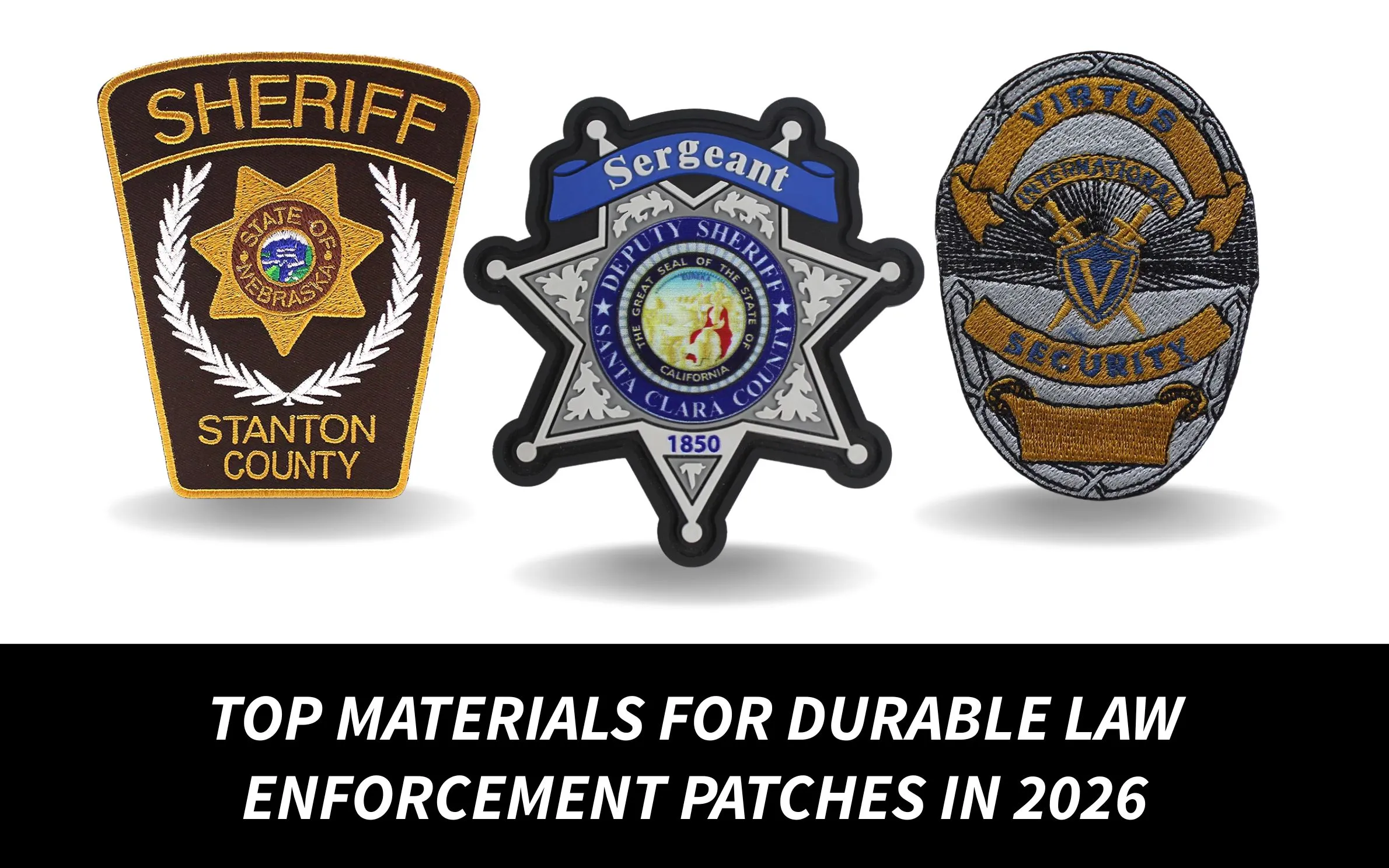
Uniforms change. Gear evolves. But one thing stays constant… patches still carry identity.
In 2026, law enforcement patches are expected to do more than look official. They need to survive heat, rain, sweat, friction, long shifts, and constant movement. A patch that curls after a few washes? Not acceptable. One that fades in the sun? Even worse.
Durability isn’t optional anymore. It’s standard.
So if you’re choosing materials for your department, special unit, or tactical team, here’s what actually holds up… and what doesn’t.

1. Embroidered Patches – Still the Standard
Embroidered patches have been around forever. And honestly, they’re still a top choice for law enforcement patches. There’s a reason departments trust them.
They look official. Clean. Structured.
High-quality embroidery uses colorfast threads that resist fading. Tight stitching prevents unraveling. When edges are reinforced properly, these patches can last years on duty uniforms.
They work especially well for:
- Patrol uniforms
- Dress uniforms
- Sheriff and municipal departments
- Traditional badge-style designs
But here’s the key… quality thread matters. Cheap thread fades fast. Cheap stitching loosens.
If embroidery is done right though, it ages with character. It doesn’t fall apart easily. It softens slightly over time but keeps its shape. That balance is why many departments still prefer embroidered law enforcement patches for daily wear.
2. PVC Patches – Built for Harsh Conditions
Now let’s talk about PVC.
PVC patches are rubber-based. Flexible. Waterproof. Practically immune to fraying because there are no threads to unravel. That alone makes them extremely durable.
In rough environments… K9 units, SWAT teams, tactical divisions… PVC law enforcement patches are gaining ground fast. They resist:
- Heavy rain
- Mud and dirt
- UV exposure
- Abrasion from vests and gear
They wipe clean. They hold color longer than thread. And edges don’t curl the way fabric sometimes can.
The look is more modern. Slightly tactical. Less traditional.
Some departments mix materials… embroidery for standard uniforms, PVC for field gear. Smart approach, honestly.
3. Woven Patches – Precision and Clean Detail
Woven patches sit somewhere between embroidery and PVC in terms of durability.
They’re made by weaving threads tightly together instead of stitching raised designs. The result? A smooth finish with sharp detail. Fine lines look crisp. Small lettering stays readable.
For law enforcement patches with detailed seals or complex unit insignias, woven material works well. It doesn’t have the raised texture of embroidery, but it handles detail beautifully.
Durability is solid, especially when paired with reinforced backing. Not as weatherproof as PVC. Not as textured as embroidery. But a strong middle-ground option.
4. Twill Backing and Edge Reinforcement
Material alone isn’t everything. Backing and borders matter just as much.
Most durable law enforcement patches use heavy twill backing. It gives structure. Keeps the patch from sagging or bending awkwardly.
Then there’s edge finish:
- Merrowed edges (thick stitched border)
- Laser-cut edges (clean and sharp)
- Heat-sealed edges
Reinforced borders prevent fraying. This small detail adds years to a patch’s life. Departments often overlook it. They shouldn’t.
5. Hook-and-Loop (Velcro) Backing for Tactical Use
In 2026, removable patches are everywhere. Officers rotate assignments. Gear changes. Names swap.
Hook-and-loop backing allows flexibility. And when it’s high quality, it holds strong even after repeated removal.
Weak Velcro wears out quickly. Strong industrial-grade hook-and-loop backing keeps law enforcement patches secure during movement and long shifts.
Sew-on patches are still common for dress uniforms. But tactical setups lean heavily toward Velcro-backed PVC or embroidered patches.
6. Reflective and Specialty Materials
Some units require visibility. Highway patrol, night operations, roadside duty… reflective thread or backing improves safety.
Reflective law enforcement patches catch headlights and flashlights. They increase visibility without sacrificing professionalism.
These materials must be carefully manufactured though. Cheap reflective coating cracks. Quality production prevents that.
It’s not for every department. But when safety demands it, it’s worth considering.
What Material Is Best in 2026?
There isn’t one universal answer.
- Traditional patrol? Embroidery still dominates.
- Tactical field use? PVC performs better.
- Detailed insignias? Woven might be ideal.
- Night visibility? Reflective additions help.
The smartest departments match material to function. Not just looks.
And when you work with an experienced manufacturer like Quality Patches, they help you decide what fits your exact environment. Not guesswork. Real guidance.
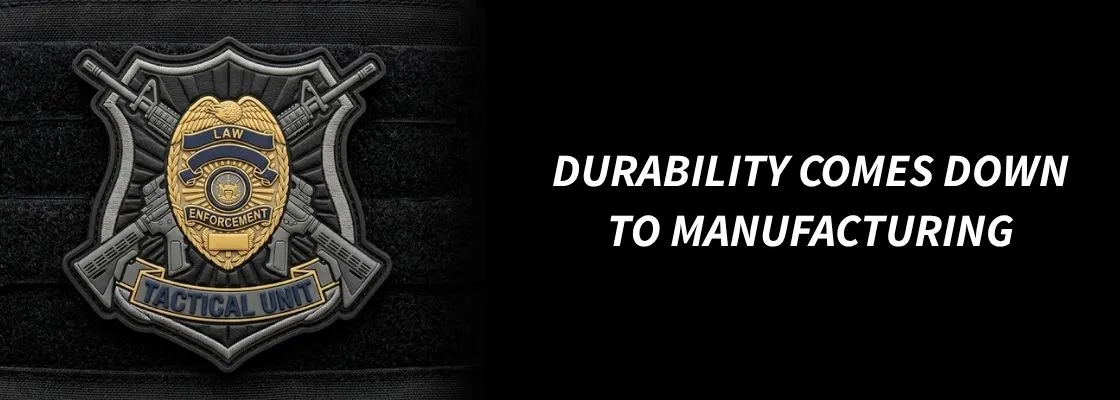
Durability Comes Down to Manufacturing
Even the best material fails if production is sloppy. Loose stitching. Thin backing. Weak adhesive. All problems waiting to happen.
Strong law enforcement patches come from:
- High thread density
- Premium PVC molds
- Reinforced borders
- Industrial-grade backing
- Accurate color matching
Cutting corners reduces lifespan. Simple as that.
That’s why departments that want consistency often stick with trusted providers. If you need patches that hold up under pressure and still look sharp years later, Quality Patches specializes in durable production methods that are built for real duty environments.
The Cost Factor in 2026
Material affects pricing. PVC molds cost more upfront but last longer. Embroidery setup varies by stitch count. Woven depends on detail complexity.
Bulk orders reduce per-unit cost significantly. Many departments plan ahead… ordering extra inventory to maintain uniform consistency over time.
Investing in higher-grade materials might cost slightly more at first. But replacing cheap patches every year costs more long-term.
Durability saves money. Always has.
Final Thoughts
In 2026, expectations are higher. Officers move more. Gear carries more weight. Environments are tougher.
Your patches need to keep up.
The best law enforcement patches aren’t chosen randomly. They’re selected based on function, environment, and long-term wear. Embroidered for tradition. PVC for toughness. Woven for detail. Reflective for visibility.
Match the material to the mission.
And if you want patches built to last… not just look good in a catalog… working with a specialist like Quality Patches ensures your department gets durability, clarity, and professional finish without compromise.
FAQs
- Which material lasts longest for law enforcement patches?
PVC typically lasts the longest in harsh outdoor conditions because it doesn’t fray or absorb moisture. High-quality embroidery also lasts years when reinforced properly. - Are embroidered patches outdated in 2026?
Not at all. They remain the standard for many departments, especially for dress and patrol uniforms. - Do PVC patches look too tactical for regular patrol?
It depends on department standards. Some agencies prefer traditional embroidery for public-facing uniforms and reserve PVC for field gear. - How important is backing quality?
Very. Weak backing leads to curling or detachment. Industrial-grade hook-and-loop or reinforced sew-on backing makes a major difference. - Can law enforcement patches be both durable and detailed?
Yes. Woven patches provide sharp detail, and PVC offers durability with bold clarity. Choosing the right manufacturer ensures both strength and precision.