 Skip to content
The History of Military Patches: From WWI to Modern Units
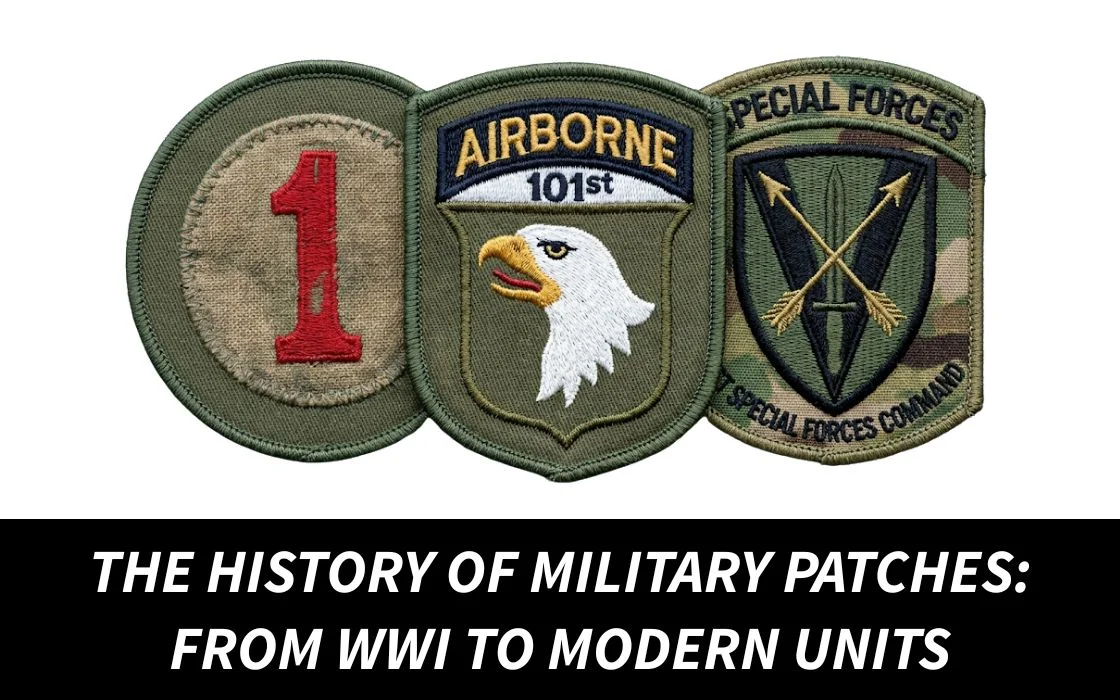
You’ve probably seen them a hundred times. On shoulders, sleeves, uniforms lined up in formation.
Easy to overlook at first. Just a patch, right?
Not really.
Military patches carry history. Real history. Units, battles, identity… all stitched into something small enough to sit on a sleeve.
And the interesting part? They didn’t start polished or perfect. Early versions were rough, almost improvised. But they meant something from day one.
That meaning stuck. Even as everything else changed.
Where It All Began
The story of military patches goes back to World War I. Before that, identifying units quickly wasn’t always simple. Uniforms looked similar, especially from a distance.
Soldiers needed something visible. Something fast.
So patches started showing up. Nothing fancy. Just basic cloth pieces, sometimes hand-cut, stitched onto uniforms. Shapes, numbers, simple symbols.
Some units even made their own. No strict standard at the time. If it worked, it worked.
And yeah, they looked rough. Uneven stitching, limited colors, not the clean look you see today.
But they did the job. And more than that… they started building identity.

World War II Changed Everything
By the time World War II came around, things got more structured.
Armies realized the value of consistency. So military patches became more standardized. Placement on the shoulder became common. Designs were more intentional.
You started seeing stronger symbols. Eagles, stars, shields. Things that carried meaning beyond just identification.
At the same time, patches became something personal for soldiers.
Imagine being far from home, long deployments, high pressure every day. That patch on your shoulder? It reminded you where you belonged. Who you were standing with.
It wasn’t just useful anymore. It meant something.
Patches Became a Sign of Earning Your Place
As units grew and specialized roles developed, patches started reflecting more than just the unit name.
Certain military patches were tied to specific divisions or elite groups. You didn’t just get those automatically. You had to earn them.
That changed how people saw patches.
They weren’t just identifiers anymore. They showed experience. Skill. Time put in.
And inside the military, those details matter. A lot.
You see a patch, you already understand something about the person wearing it. No explanation needed.
The Shift After the War
After WWII, patches didn’t fade away. They evolved.
The Korean War, Vietnam, and later conflicts pushed things further. Materials improved. Embroidery got sharper. Colors became more defined.
Military patches started lasting longer too. Earlier ones could wear out pretty quickly. Newer versions held up better through washing, weather, and rough conditions.
And at the same time, soldiers began keeping them.
Not just wearing them. Keeping them.
Patches turned into memories. Something you hold onto after service. Something you show your kids years later.
That’s when they started becoming collectible.
The Meaning Behind the Design
If you look closely at military patches, nothing is random.
Colors often represent values. Red for sacrifice, blue for loyalty, things like that.
Symbols carry meaning too. Eagles, swords, shields. Strength, protection, readiness.
Even the shape of a patch can say something. Circular, shield-style, tabbed designs — they all come from somewhere.
And once you understand that, you start seeing patches differently.
Not just design… but a message.
From Basic Stitching to Precision Work
Early patches were made with whatever was available. That’s why they looked uneven.
Today, it’s completely different.
Modern military patches are made with precision. Clean stitching, balanced colors, durable materials. Everything looks sharper.
And honestly, that matters now more than ever.
Because expectations changed.
A poorly made patch stands out instantly. Threads coming loose, colors fading too fast, edges curling. It doesn’t reflect well on the unit.
That’s why many teams now work with experienced makers like Quality Patches. Not to overdo things, but to get it right. Clean, durable, and consistent across the board.
Still Holding Onto Tradition
Even with all the improvements, one thing didn’t change.
Tradition.
Most military patches still carry elements from the past. Symbols stay. Colors stay. Core designs don’t get replaced easily.
They evolve, but they don’t lose their roots.
That connection matters. It ties current soldiers to those who served before them.
You’re not just wearing something new. You’re continuing something.
Patches Outside the Military
Over time, military patches moved beyond just active service.
Veterans collect them. Trade them. Display them. Some frame them. Others keep them stored carefully, almost like personal archives.
Collectors look for rare patches. Older ones. Limited units. Special missions.
Each patch tells a story, even outside the uniform.
And that’s why they’ve held their value over time.
Why Quality Became a Bigger Deal
Back in the early days, patches didn’t need to last forever. They just needed to work.
Now, it’s different.
A patch might stay on a uniform for years. Or sit in a collection long-term.
So quality matters more.
Strong stitching. Colors that don’t fade. Material that doesn’t wear out too fast.
That’s where working with professionals like Quality Patches makes a difference. They understand how to balance durability with clean design. Nothing overcomplicated, just done right.
Because when a patch represents a unit, it shouldn’t fall apart after a few washes.

Why They Still Matter Today
You’d think with all the technology now, something like patches might lose importance.
But they didn’t.
Military patches still play a role.
They identify units instantly. They show belonging. They carry pride.
And for the public, they create recognition.
You see a patch, you know you’re looking at something official. Something structured.
That kind of visual identity still matters.
More Than Just Fabric
At the end of the day, patches hold meaning because of what people attach to them.
The work. The experience. The time spent wearing that uniform. That’s why military patches don’t feel like small details to the people wearing them.
They represent something real. Something earned. And that hasn’t changed from WWI till now.
Wrap up!
The journey of military patches is actually pretty interesting when you look at it closely. They started simple. Rough. Made with limited resources.
Then slowly evolved. Better materials, cleaner designs, more consistency. But the core idea stayed the same.
Identity. Pride. Connection. That’s why they’re still around today. Still respected. Still valued.
And if a unit is creating patches now, it makes sense to do it properly. Not overcomplicated, just solid quality that lasts and represents the unit well.
Teams like Quality Patches help with that. They keep things clean, durable, and true to the purpose.
Because in the end… It’s a small piece of fabric. But the meaning behind it? That’s not small at all.