 Skip to content
PVC vs Embroidered Custom Military Patches: Durability Comparison
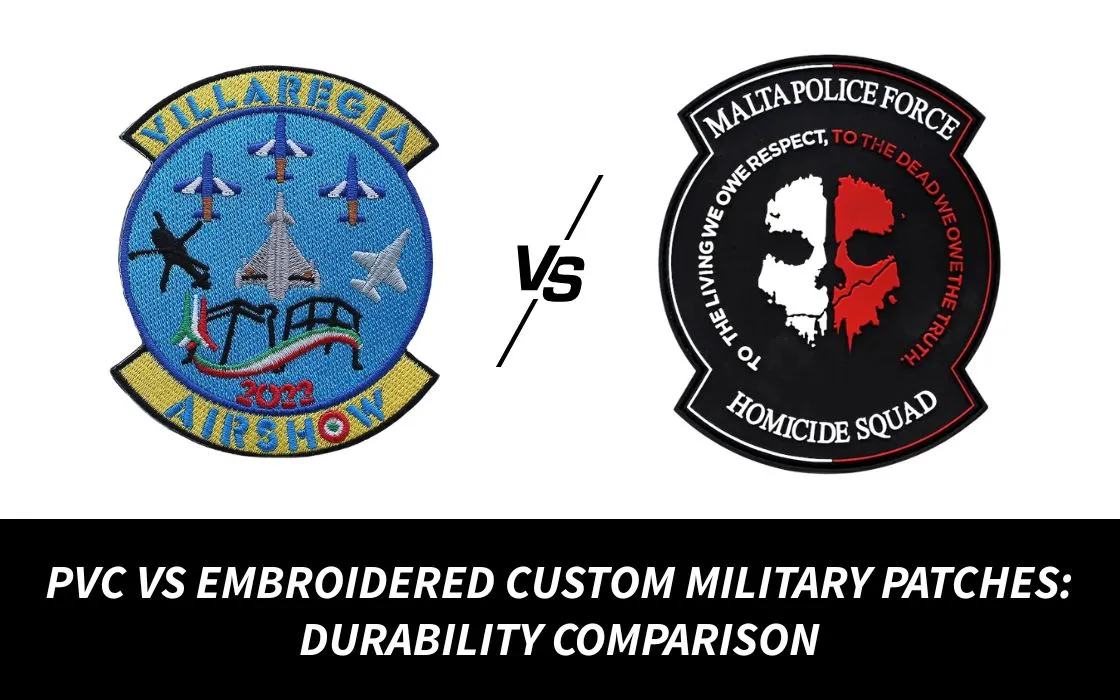
When it comes to custom military patches, durability isn’t optional. It’s the whole point.
These patches aren’t just decorative. They go on gear. Uniforms. Backpacks. Plate carriers. Jackets that see rain, mud, friction, sun. Some get worn daily. Others sit proudly on collector walls. Either way, the material matters.
Two main options dominate the market: PVC and embroidered patches. Both look good. Both serve a purpose. But they behave very differently once real life hits them.
Let’s break it down properly.

What Are Custom Military Patches Used For?
Custom military patches carry identity. Unit insignia. Rank tabs. Morale patches. Deployment markers. Even tactical fashion pieces inspired by military culture.
For active environments, patches go through heavy friction. Constant movement. Weather exposure. Sweat. Washing cycles. Hook-and-loop removal again and again.
For fashion and collectors, the demands shift slightly. The patch still needs to look sharp over time. No fading. No curling edges. No frayed threads ruining the design.
That’s where the durability conversation starts.
PVC Military Patches: Built for Abuse
PVC stands for polyvinyl chloride. It’s a flexible plastic material molded into layered designs.
Right away, you’ll notice the difference. PVC patches feel smooth but structured. Designs are raised. Edges are clean. Colors are solid and saturated.
In tough environments, PVC performs extremely well.
Rain doesn’t affect it. Mud wipes off easily. It doesn’t absorb moisture. It doesn’t fade quickly in sunlight. And since it’s molded, there are no threads to pull loose.
Tactical users love that. Airsoft players too. Even outdoor brands lean toward PVC when gear needs to survive serious wear.
Another big advantage? Cleaning is simple. Rinse it. Wipe it. Done.
Embroidered Military Patches: Traditional and Textured
Embroidered custom military patches carry history. They’ve been around for decades. There’s something about stitched thread that feels authentic.
The layered embroidery creates texture. Depth. Slight shine depending on the thread used. For ceremonial uniforms or heritage designs, embroidery still feels right.
But threads are threads.
Over time, friction can cause fraying. Edges may curl if backing isn’t strong. After repeated washes, colors can soften. Not always dramatically. But enough to notice.
For collectors, embroidery has a charm. It feels classic. For tactical streetwear, that stitched aesthetic fits well with denim jackets and field-style caps.
It just requires more care.
Weather Resistance: Clear Winner?
PVC handles moisture better. No debate there.
It doesn’t soak. It doesn’t hold water. It dries instantly. That makes it ideal for plate carriers, outdoor gear, and damp climates.
Embroidered patches can absorb moisture slightly. Not enough to ruin them immediately, but repeated exposure adds wear. Threads don’t love constant dampness.
If durability in extreme weather is your priority, PVC wins that round comfortably.
Abrasion and Friction
Think about where patches sit. Shoulder sleeves brushing against gear. Backpacks rubbing against fabric. Hook-and-loop systems pulling constantly.
PVC flexes without tearing. The molded surface holds up well against scraping.
Embroidery can withstand daily wear too, but heavy abrasion may eventually loosen threads. It’s gradual. Still, it happens.
For high-friction zones, PVC tends to last longer.
Color Longevity
PVC colors are molded into the material. They stay bold for a long time. Sun exposure affects everything eventually, but PVC resists fading better than thread.
Embroidered patches rely on dyed thread. Over time, especially under strong sunlight, colors can soften. Not instantly. Just slowly.
For fashion use, that subtle fading might even add character. For tactical clarity, sharp color contrast may matter more.
Weight and Flexibility
PVC patches are lightweight and slightly rubbery. They flex with fabric without losing shape.
Embroidered patches are soft and fabric-based. They bend naturally but may lose edge stiffness if backing isn’t reinforced.
Both work well on hats and jackets. On plate carriers and rigid gear, PVC feels more stable.
Ready to bring your patch design to life? Whether it’s tactical, collectible, or streetwear-inspired, Quality Patches makes the process simple and stress-free. And the final result feels solid in your hands.
Velcro Compatibility
Most custom military patches today use hook-and-loop backing.
PVC bonds extremely well with Velcro. The backing sits flat and secure.
Embroidered patches also work fine, but require proper reinforcement during production. Without it, repeated removal can weaken stitching.
Small detail. Big difference long term.
Fashion and Streetwear Perspective
Here’s where it gets interesting.
PVC looks modern. Clean lines. Sharp contrast. Tactical aesthetic.
Embroidered patches feel heritage-driven. Classic military influence. Vintage vibe.
For streetwear brands blending military inspiration into fashion, embroidery often fits that aesthetic better. It feels authentic. Rugged.
PVC feels more contemporary. More technical.
Neither is wrong. It depends on the story your design tells.
Cost Considerations
At scale, PVC can be slightly more cost-efficient due to molding processes.
Embroidery involves thread count, stitch density, digitizing complexity. That can raise cost depending on detail.
But cost should never be the only factor. Longevity and use-case matter more.
A cheap patch that fails quickly costs more in the long run.

So Which One Should You Choose?
If your custom military patches will face heavy weather, constant friction, outdoor training, tactical environments — PVC is the practical choice.
If you value tradition, texture, and a classic military look for uniforms, collectors, or fashion applications — embroidered patches still shine.
Some brands even mix both. PVC for field use. Embroidery for display and ceremonial pieces.
That’s smart thinking.
Wrap up!
Custom military patches aren’t just fabric or plastic. They represent identity. Function. History. Style.
PVC delivers durability, easy maintenance, and modern tactical appeal. Embroidery delivers tradition, texture, and timeless character. The right choice depends on how the patch will live. On gear. On jackets. In the field. Or in a collection.
Need PVC or embroidered custom military patches made the right way? Check out Quality Patches. Their team walks you through sizing, durability options, and production details so you avoid costly mistakes later.Pick the material that matches the mission. That’s what really matters.
FAQs
- Are PVC custom military patches better for everyday wear?
If you’re wearing them on backpacks, caps, or jackets that see regular use, PVC holds up extremely well. Rain doesn’t bother it. Dirt wipes off fast. It keeps its shape. That said, for casual fashion pieces where texture matters more than extreme durability, embroidered custom military patches still look great and feel more classic. - Do embroidered custom military patches fall apart easily?
Not easily, no. Good quality embroidery can last years. The issue isn’t instant damage… it’s long-term friction. Threads may loosen after heavy rubbing or repeated washing. For collectors or light uniform use, they’re perfectly reliable. For rough tactical training, PVC usually survives longer. - Which option looks more authentic for military-style fashion?
Depends on the vibe you’re going for. Embroidered custom military patches feel traditional. Heritage. Almost vintage. PVC feels modern and tactical, like something built for current field gear. Streetwear brands often choose based on that aesthetic alone. Both can look authentic. It just comes down to story and setting.