 Skip to content
Patches Embroidery for Logos: What Works and What Doesn’t
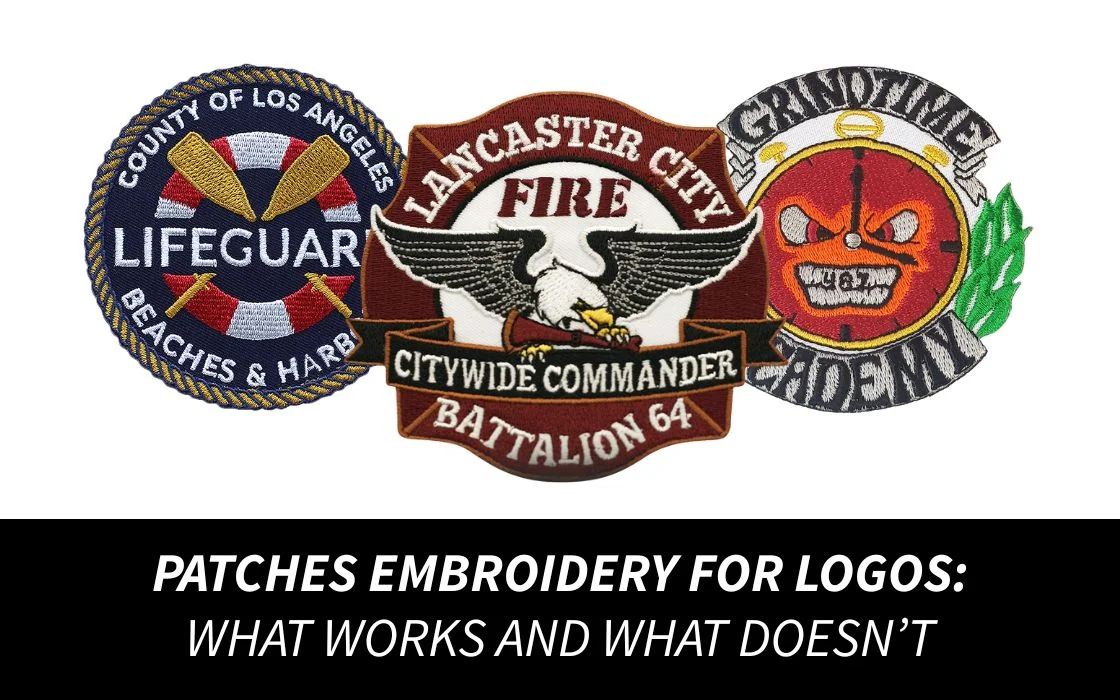
Logos look simple on screen. Clean lines. Perfect spacing. Balanced shapes. But once that logo moves onto fabric, things change fast. Thread behaves differently than pixels. Some designs translate beautifully. Others struggle, even when the logo itself is strong.
That’s where patches embroidery becomes less about decoration and more about smart decisions.
Not every logo works the same way when stitched. Knowing what works and what doesn’t can save brands time, money, and frustration.
Why Logos and Embroidery Don’t Always Agree
Embroidery adds texture. That’s its strength, but also its limitation.
Thread has thickness. Stitches overlap. Small gaps close up. Fine details can disappear if the design isn’t adjusted. Logos created for digital use often assume perfect sharpness, which fabric can’t always deliver.
Good patches embroidery doesn’t copy a logo blindly. It adapts it. That difference matters more than most people expect.

What Works Well in Embroidered Logo Patches
Some design elements naturally suit embroidery. These logos usually translate smoothly with minimal changes.
Bold Shapes and Clean Lines
Logos with solid shapes hold up best. Thick outlines. Clear icons. Strong contrast. These features allow stitches to stay defined and readable.
When thread fills space evenly, patches embroidery looks confident and intentional.
Limited Color Palettes
Fewer colors often mean cleaner results. Each color change adds complexity. Too many shades can crowd the design and make it feel busy.
Logos with two to four main colors usually embroider well and stay visually strong.
Simple Typography
Fonts with thicker strokes work better than thin, delicate lettering. Sans-serif styles often outperform decorative fonts.
In patches embroidery, legibility always wins over style.
What Doesn’t Translate Well in Embroidery
Some logo elements look great on screens but struggle on fabric.
Very Small Text
Tiny letters don’t survive thread very well. They blur. They merge. Sometimes they disappear completely.
If the text can’t be read from a short distance, it probably won’t work in patches embroidery without adjustment.
Fine Gradients and Shading
Embroidery isn’t printing. Gradients don’t fade smoothly from one color to another. They break into visible stitch patterns, which can look messy if not planned carefully.
Flat colors usually perform better.
Overly Detailed Artwork
Illustrations with too many small elements can lose clarity. Embroidery simplifies everything, whether you want it to or not.
That’s why smart brands simplify their logos specifically for embroidered use.
Size Makes or Breaks an Embroidered Logo
Size matters more than people think.
A logo that looks perfect at 5 inches wide might fall apart at 2 inches. Details shrink. Stitch density increases. Edges lose definition.
Good patches embroidery planning starts with deciding where the patch will go. Chest, sleeve, cap, bag. Each placement has limits.
Experienced manufacturers help adjust designs so they stay readable at the intended size.
Stitch Type Affects the Final Look
Not all embroidery stitches behave the same way.
Satin stitches create smooth, shiny surfaces. Fill stitches add texture and depth. Running stitches handle outlines and fine lines.
Choosing the wrong stitch type can make a logo feel heavy or uneven. Choosing the right one brings balance.
High-quality patches embroidery uses stitch types strategically, not randomly.
Borders and Edge Finishing Matter
A good embroidered patch needs a clean boundary. Without it, the design can feel unfinished.
Merrowed edges work well for classic, rounded patches. Heat-cut or laser-cut edges suit modern shapes and sharper designs.
The edge frames the logo. A weak edge cheapens everything inside it.
This is where professional patches embroidery stands apart from rushed production.
When Embroidery Isn’t the Best Option
Honesty matters here.
Some logos simply work better as woven or printed patches. That doesn’t make embroidery bad. It just means choosing the right method.
Logos with tiny text, thin lines, or complex gradients often look cleaner when woven. Flat, detailed designs benefit from that approach.
Good manufacturers explain this upfront instead of forcing embroidery where it doesn’t belong.
How Quality Patches Helps Logos Look Right
Quality Patches doesn’t treat logos like clipart. They review artwork. They suggest changes when needed. They explain why something might not stitch well.
That guidance matters. Backing choices, size adjustments, stitch density, and edge finishing all affect how patches embroidery turns out in real life.
The goal isn’t just to make a patch. It’s to make one that represents the brand properly.
Testing Before Full Production Saves Headaches
Sampling isn’t a waste. It’s protection.
A test patch shows how the logo behaves in thread. It reveals issues early. Slight spacing changes or line thickening can make a big difference.
Brands that rush straight to bulk production often regret it. Brands that test get cleaner results.
Professional patches embroidery includes that step for a reason.

Consistency Across Products Is the Real Goal
A logo rarely lives on one item only. Shirts, jackets, caps, bags. The patch should feel consistent everywhere.
That means adjusting size without changing identity. Adjusting stitch density without losing shape.
When done right, patches embroidery creates recognition at a glance, no matter where it appears.
FAQs
Can any logo be embroidered as a patch?
Most can, but some need adjustments. Simplification often improves results.
Is embroidery better than woven for logos?
It depends on the design. Bold logos suit embroidery. Detailed logos often suit woven patches better.
Does patch size affect logo clarity?
Yes. Smaller patches require simpler designs to stay readable.
How many colors work best in embroidered logos?
Usually two to four. More colors increase complexity and cost.
Why work with a professional patch maker?
Because experience prevents design issues that aren’t obvious until stitching begins.
Wrap up!
Embroidery adds character. Texture. Presence. But it also demands smart design choices.
When logos are adapted properly, patches embroidery enhances them. When they aren’t, the results feel off no matter how good the logo looked on screen.
Its important to understand what works and what needs our attention. This will make all the difference. And with the right guidance, embroidered logo patches can look exactly the way a brand intends.