 Skip to content
Modern Custom Military Patches vs. Traditional Designs: What’s Changed
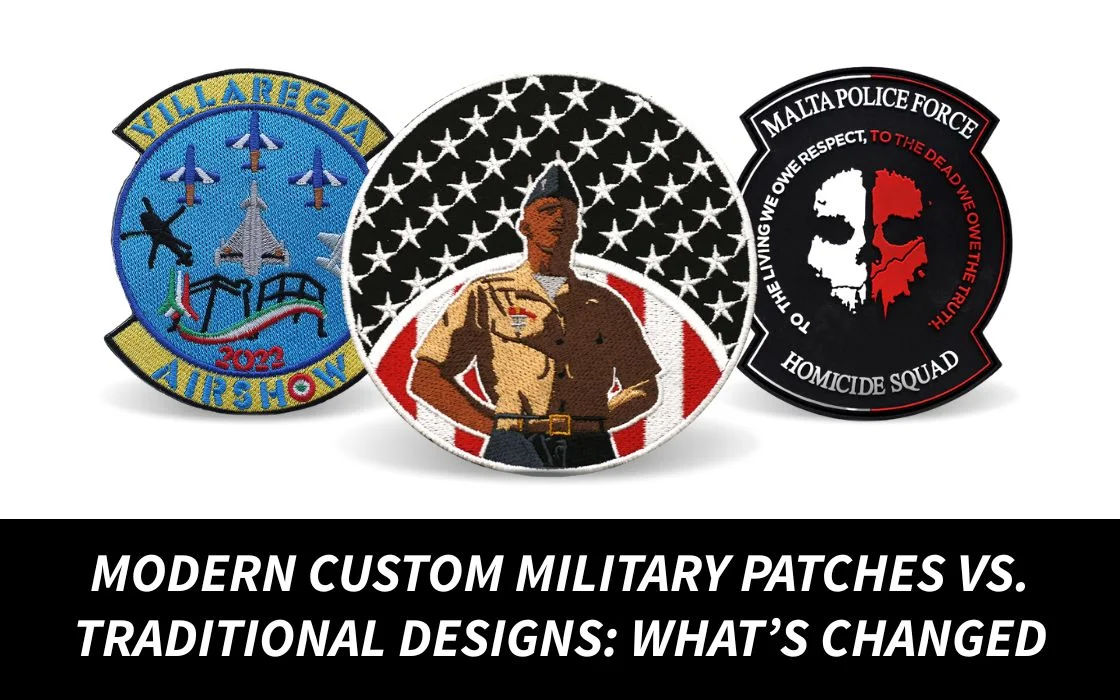
Military patches were never meant to look fancy. They existed to mark identity, show belonging, and tell people who you were without saying a word. For a long time, traditional designs did that job well. Heavy embroidery. Clear symbols. Nothing extra.
But the military itself didn’t stay the same. Gear changed. Uniforms changed. The way teams operate changed too. And slowly, custom military patches had to change along with it.
Not to replace tradition. Just to work better in today’s world.

How Traditional Military Patch Design Set the Standard
Older military patches followed strict rules, mostly because they had to. Embroidery was the most reliable option available. Thick thread held up under stress. Simple artwork survived rough handling.
Designs stayed bold. Letters stayed large. Symbols stayed obvious. Not because designers lacked creativity, but because clarity mattered more than style.
Those early custom military patches were built for long wear. Sewn directly onto uniforms. No quick swaps. No backups. If it failed, it failed publicly.
That mindset still influences military patch design today.
Why Modern Military Use Demanded Change
As uniforms became lighter and more modular, patches needed to match that flexibility. Tactical vests replaced older jackets. Velcro panels appeared everywhere. Units needed to remove or replace patches quickly depending on the situation.
A single patch design was no longer enough. Training patches. Deployment patches. Low-visibility versions. Full-color versions for formal use.
Modern custom military patches weren’t created to look different. They were created to keep up.
Materials Expanded Beyond Embroidery
Embroidery is still respected, and for good reason. But it isn’t always the best tool anymore.
PVC patches brought durability to another level. They resist water, dirt, and cracking. They keep shape even after heavy use. That matters in real conditions.
Woven patches allow finer detail without bulk. Small text stays readable. Clean edges look sharper.
Leather and specialty materials entered for ceremonial or commemorative use, where appearance matters just as much as longevity.
Today, custom military patches are chosen based on how they’ll be used, not just how they look.
Design Detail Became Smarter, Not Louder
Traditional designs leaned on simplicity. Modern designs still value that, but they allow more control.
Fine outlines. Layered symbols. Compact text that doesn’t disappear after a few months. All possible now.
Good designers know when to stop. Too much detail ruins a patch fast. The goal isn’t decoration. It’s communication.
That balance is what separates well-made custom military patches from forgettable ones.
Backing Options Changed How Patches Are Used
Sew-on backing once meant permanence. You stitched it on and that was it.
Now, hook-and-loop backing dominates because it makes sense. Units can adapt without damaging uniforms. Patches can change with roles, locations, or training phases.
Some still prefer sew-on for dress uniforms. That hasn’t gone away.
Modern custom military patches offer choices, not restrictions.
Color Choices Became Tactical
Older patches used brighter colors because visibility mattered. Modern designs focus more on blending in.
Subdued tones. Earth colors. Low-contrast palettes. Even infrared-safe options for night operations.
At the same time, full-color patches still exist for ceremonial or commemorative use. Same design. Different purpose.
That flexibility is now expected in custom military patches.
Regulations Still Matter More Than People Think
Modern doesn’t mean careless. Military standards still guide size, shape, placement, and symbols.
The difference is experience. Skilled manufacturers know how to design inside those limits without making patches feel generic.
Quality Patches works with these standards daily. That means fewer revisions, fewer mistakes, and patches that actually get approved.
Meaning Matters More Than Ever
Patches always told stories, but modern designs allow more of that story to be included. Dates. Locations. Unit mottos. Small references only insiders recognize.
These details don’t make patches busy. They make them personal.
Well-made custom military patches become reminders. Not decorations.

Craft Still Makes or Breaks the Patch
Machines improved, but bad work still shows fast. Loose stitching. Weak edges. Inaccurate colors. All problems that appear after a few wears.
Good patches hold shape. Borders stay clean. Materials don’t crack or fade early.
Quality Patches focuses on those details because military patches don’t get second chances. They either perform, or they don’t.
Tradition and Modern Design Can Exist Together
This isn’t a choice between old and new. It’s about using the right approach for the right situation.
Traditional patches still belong on dress uniforms and historical units. Modern designs belong on tactical gear and daily-use uniforms.
Smart units don’t argue about style. They focus on function.
FAQs
Are modern custom military patches allowed on official uniforms?
Yes, as long as they follow regulation standards for size, color, and placement.
Do PVC patches last longer than embroidered ones?
In harsh conditions, yes. Embroidery still works well for formal and everyday use.
Can one design be used in multiple patch styles?
Absolutely. Many units do exactly that.
Is Velcro backing secure enough for field use?
High-quality hook-and-loop backing holds strong and allows quick changes.
Why does the manufacturer matter so much?
Experience prevents design errors, material failures, and wasted time.
Wrap up!
Military patches didn’t lose their meaning over time. They adapted.
Modern custom military patches still represent identity, service, and pride. They just do it with better materials, smarter design, and more flexibility.
That change wasn’t about trends.
It was about reality.