 Skip to content
Military Patches: History, Types, and Their Meaning in Modern Armed Forces
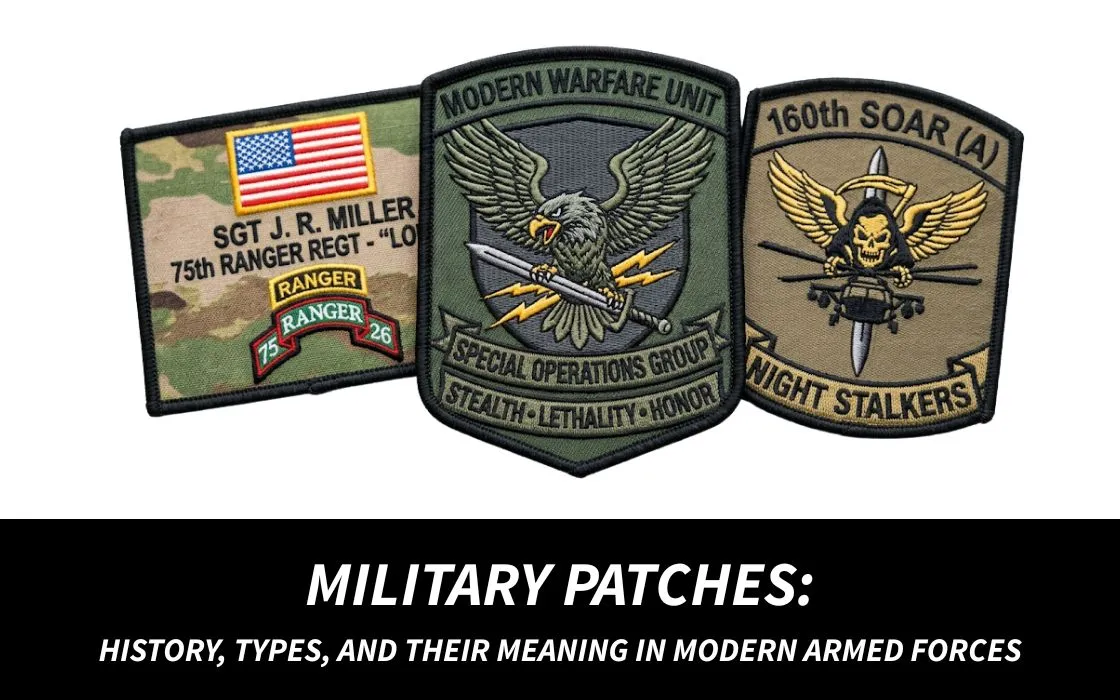
Military uniforms contain colors, symbols, and badges, which display a soldier’s uniqueness, profession, and past experiences. Among the most recognizable characteristics of military uniforms are military patches. Soldiers wear embroidered badges on the sleeves, shoulders, or tactical gear of soldiers. Patches mark a soldier’s unit, rank, location of work, and skills.
Historians trace the use of military patches back to armies that needed easier soldier identification. Patches continue to be a vital part of the armed forces and are also extremely sought after by veterans, collectors, and tactical gear enthusiasts.
The History of Military Patches
The military uniform badge system began in the 19th century as a convenient way for soldiers to visually identify their own groups. Many groups would use “Corps” badges on their uniforms during the American Civil War. Indeed, military insignia patches allowed for the immediate recognition of friendly troops and enemy troops in crowded and confusing man-made theaters of battle.
World War I and the Rise of Unit Patches
During World War I, soldiers would wear shoulder sleeve morale patches to identify their unit and division. An example is the original “Wildcat” patch created by the US Army’s 81st Division to distinguish their unit as part of the 81st Army Division.
Evolution Through World War II and Modern Warfare
During World War II, soldiers used unit identification symbols. Patches recognized each Army Division, Air Force Squadron, Navy Unit, etc. Fighter Pilots began using special squadron patches with inspiration from the artwork on their planes.
Today we see tactical insignia on combat uniforms, tactical vests, backpacks, and helmets.
Why Military Patches Matter in Modern Armed Forces?
- Unit Identification
A Soldier’s division, brigade, regiment, or group also go by the name of formation or unit patches. They provide the identification for the group or unit that a soldier is a member of in the military hierarchy.
- Rank and Skill Recognition
Patches represent a soldier’s rank or skill, as well as soldier’s morale and identity within the unit. To recognize the soldier’s recognition of an operation, campaign, or deployment in the unit’s history, patches are used.
- Morale and Identity
The team uses morale patches to create better team spirit and team unity. The patches which soldiers wear on tactical gear have designs, slogans and distinct artwork.
- Commemoration of Missions
Military units create extraordinary patches which honor their meaningful missions, campaigns and deployment operations. The patches serve as historical documentation of military service and their achievements.
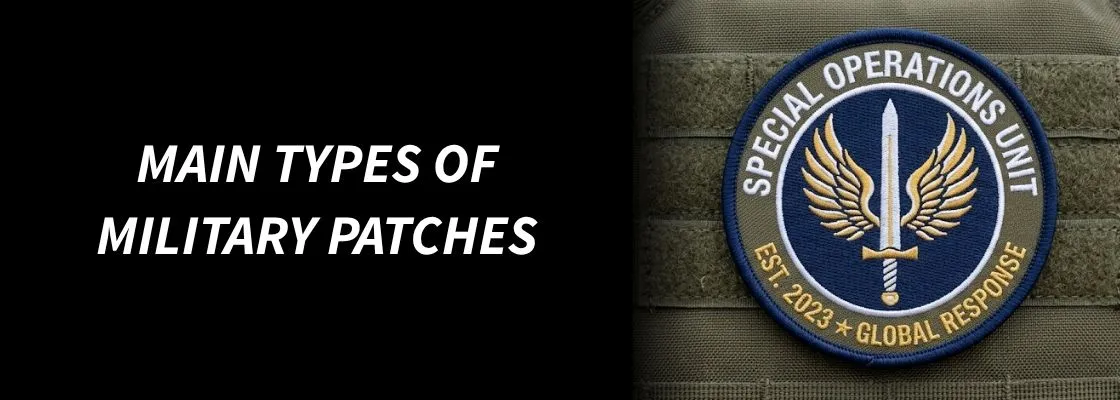
Main Types of Military Patches
- Unit Patches
Worn on the upper arm (wearing side), and symbolizes the specific division, squad, or battalion of a soldier (e.g. airborne, infantry).
- Rank Patches
Signifies how well a soldier can lead. Used by both the Army and the Navy, these patches are found in both army-style (i.e., brass insignias) as well as naval-style (i.e., epaulettes) uniforms.
- Specialty or Skill Patches
Implies special training received by a soldier that exhibits an individual area of ability (i.e., airborne, special forces, medical corps, intelligence).
- Campaign and Deployment Patches
Soldiers who participate in combat or military actions during war also get a combat patch.
- Morale Patches
Morale patches are informal patch designs that demonstrate team spirit and humor. They are usually attached to clothing using Velcro.
The Military Patch Meaning
Common Symbols
- Stars – Represent achievement, rank or national identity
- Swords – Represent strength and readiness to fight.
- Eagles – Represent honor, power, and protection.
- Shields – Represent defense and safety.
Patches also contain meaning in their colors:
- Red represents courage and sacrifice
- Blue stands for loyalty
- Gold represents excellence.
How Military Patches Are Made Today?
Current practices for creating military patches use modern methods to produce military patches. The production process utilizes embroidery, woven fabric and PVC rubber materials to create many products.
The majority of patches use Velcro support which assists users to attach and detach them with ease.
Military Patch Material Comparison
Material | Durability | Weather Resistance | Design Precision | Best Use Case |
Embroidery | High | Moderate | Good | Traditional military patches, uniform |
PVC | Very High | Excellent | High | Tactical gear, outdoor environments |
Woven | Medium-high | Good | Very High | Detailed logos, small text designs |
Quality Checklist for Military Patch Manufacturing
A couple of items you can check when reviewing a potential military patch supplier include:
- Stitching Quality
The stitching should look good, be even, be tight and have no loose threads.
- Color Fastness
Patches must maintain their original color after extended exposure to the sun and exposure to sweat and washing.
- Backing Type
Selecting the correct backing for the intended use of the patches can also be important.
- Design Clarity
The symbols, text and shapes on the patches should be clear and easy to read.
How to Choose a Quality Supplier for Patches?
When looking to buy a patch, select suppliers that offer the following services:
- Custom design assistance
- Quality embroidery technology to produce patches
- Variety of material
- Definition of production timelines
- Samples of patches have been produced before making a large order
- Manufacturers that have experience in producing patches.
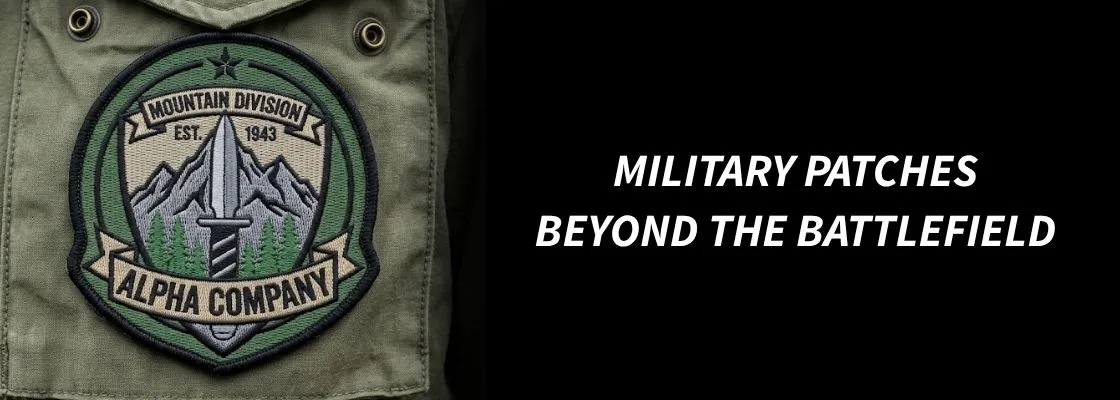
Military Patches Beyond the Battlefield
People also use military patches outside active military service. Many people collect patches as historical items.
Veterans, tactical gear fans, and law enforcement officers use military patches. Collectors highly value rare historical patches.
How to Identify an Authentic Military Patch?
Military patch collectors pay close attention to quality by reviewing the stitching, colors, and shapes used to create patches. In some instances collectors check patches, find out which unit produced them, and their date of production or deployment dates.
Many collectors do research on military units’ histories, their era of production and their deployment history before they make a large purchase of a rare or valuable military patch.
Collecting military patches is a common pastime for people who are interested in history and veterans. People will look for patches from historic units and wars or patches from unique missions; there are collectors who specialize in the acquisition of rare patches.
Some combat morale insignia gain high value because of limited production and historical importance.
Wrapping Up
Military patches are one of the most recognizable components. They carry a significant amount of meaning for each unit now, showing their pride in the unit and the unit’s accomplishments or skill or history or all three.
For professional results, look for suppliers that offer accurate detailing, strong fabric quality, and reliable production standards. Order your custom military patches today to ensure your unit, organization, or team receives durable, high-quality patches that represent identity, pride, and professionalism.
FAQs
- What are military patches used for?
The purpose of military patches is to provide information about a soldier’s unit, rank, qualifications and mission history. They are a way to visually express a soldier’s honor, service and accomplishments.
- Are military patches collectible?
Yes, military patches are popular collector items, especially rare or historic ones. Collectors often search for patches from old military units, wars, or special missions, and some rare patches can be valuable.