 Skip to content
How Law Enforcement Patches Represent Identity, Rank, and Pride
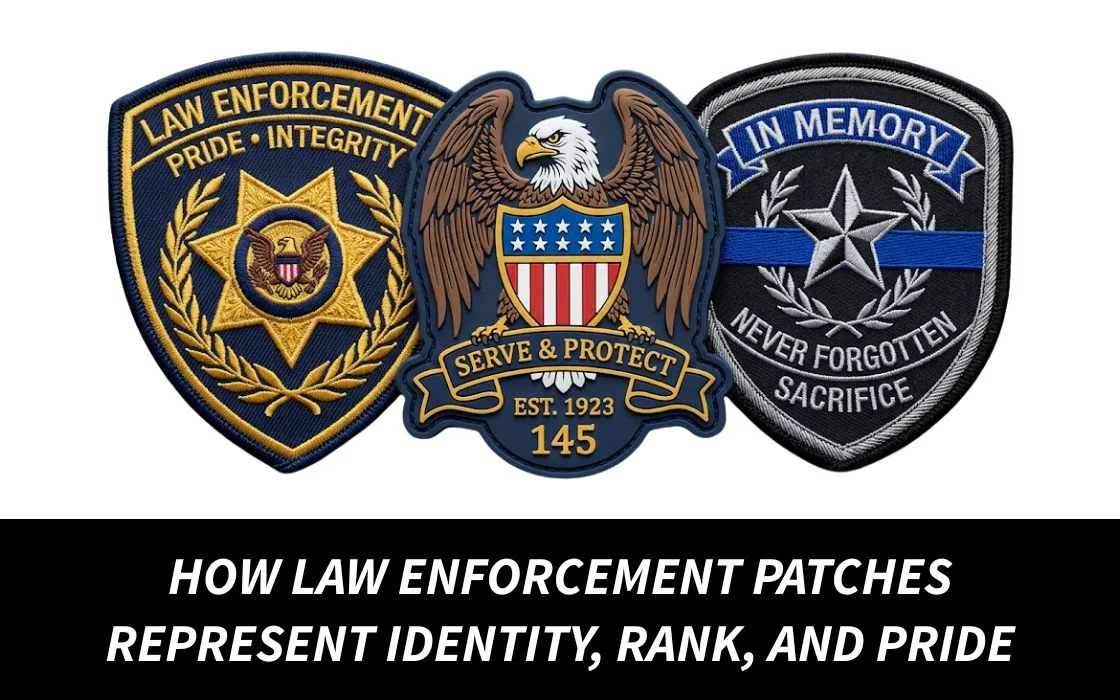
At a quick glance, most people see a uniform and move on.
But if you slow down for a second, your eyes almost always land on one thing… the patch.
That small piece stitched onto the shoulder or chest? That’s doing a lot more work than people think.
For officers, law enforcement patches aren’t decoration. They carry identity, they signal experience, and yeah… there’s pride tied into them too. Real pride.
You don’t just wear one and forget about it. It becomes part of how you show up every day.

Identity Starts With the Patch
Every department has its own look. Different colors, different shapes, different symbols. And none of it is random.
Those designs are built around location, history, and values. A city skyline, a state outline, maybe something tied to local culture. All of that gets worked into law enforcement patches so the identity feels real, not generic.
When an officer steps out in uniform, that patch instantly tells people where they belong. No introduction needed.
Inside the force, it works even faster. One glance and you already know who’s from which department. There’s a kind of silent understanding there.
And over time, that identity sticks. It’s not just a workplace anymore. It becomes something personal.
It’s Not Just Part of the Uniform
Uniforms are designed to create consistency. Everyone looks aligned, professional, ready for the job.
But patches add a layer on top of that.
Different units often carry different designs. Patrol units, tactical teams, specialized divisions… each one may have its own version of law enforcement patches.
So even within the same department, there’s variation. Subtle, but noticeable.
That difference helps officers recognize roles quickly. It also builds a sense of belonging within smaller teams. You’re not just part of the department, you’re part of a unit with its own identity.
And that matters more than people outside realize.
Rank and Experience Show Up Quietly
Badges handle rank in a clear way. No confusion there.
Patches, though… they work differently.
They don’t always spell things out, but they still communicate experience. Certain law enforcement patches are tied to specialized roles. You don’t get those by default. You earn them over time.
So when someone sees that patch, they already understand something about the person wearing it. The training behind it. The work that got them there.
No one has to say anything out loud. It’s understood.
And inside departments, that kind of recognition carries weight.
Pride That Builds Over Time
This part isn’t obvious at first, but it shows if you pay attention.
Officers take care of their patches. They adjust them, keep them clean, make sure they sit right. That’s not just about looking neat.
There’s pride in it.
Because law enforcement patches represent more than a job. They represent responsibility. The department. The people you serve.
Long shifts, difficult calls, stressful situations… the patch stays constant through all of it.
And over time, it starts to mean something deeper. Something personal.
You don’t just wear it. You stand behind it.
How the Public Sees It
Patches don’t only communicate inside the force. They send signals to the public too.
When someone sees an officer, one of the first details they notice is the patch. Even if they don’t think about it directly.
Clean, well-made law enforcement patches give off a professional feel. They suggest structure, attention to detail, and reliability.
On the flip side, worn-out or poorly made patches can do the opposite. It might seem like a small thing, but perception builds from small details.
Departments that invest in quality usually understand this. That’s why many of them work with experienced makers like Quality Patches. It’s not just about getting something stitched. It’s about making sure it represents the department properly in public.
A Connection to History
There’s also a long history behind these designs.
Most law enforcement patches don’t change drastically over time. They evolve, sure, but the core elements usually stay. Colors, shapes, symbols… they carry forward.
That continuity connects current officers to those who came before them.
It creates a sense of legacy. You’re part of something that existed long before you joined.
And that feeling… it sticks with people.
Small Details That Carry Weight
If you look closely, patches are full of small decisions. Stitching style, border thickness, color contrast, placement.
All of it affects how the patch feels.
High-quality law enforcement patches have clean edges, sharp details, and colors that hold up over time. They don’t fade fast or lose shape.
That kind of quality doesn’t happen by accident. It comes from using the right materials and working with people who know what they’re doing.
This is where teams like Quality Patches make a difference. They focus on those details so the final result doesn’t just look good for a week, but keeps its form long-term.
Because honestly, when a patch starts fraying or fading early, people notice.
Why Quality Matters More Than Ever
Things have changed over time. Equipment, technology, training… all of it has evolved.
But interestingly, law enforcement patches still hold their place. Maybe even stronger now.
In a world where everything moves fast, consistent symbols matter more. They ground things.
For officers, that patch reminds them of their role and responsibility.
For the public, it creates recognition. Familiarity.
And when that patch looks sharp and well-made, it reinforces trust in a quiet way.

The Role of Craftsmanship
Not all patches are made the same. You can tell the difference pretty quickly.
Some look flat. Edges rough. Colors slightly off.
Others feel solid. Clean. Balanced.
That difference comes down to craftsmanship.
Well-made law enforcement patches go through careful design, proper material selection, and precise stitching. It’s not rushed.
Working with experienced providers like Quality Patches helps departments avoid those small issues that add up. Things like uneven stitching or weak backing might seem minor at first, but over time they affect how the patch holds up.
And when you’re representing a department, those details matter.
More Than Just a Symbol
At the end of the day, patches carry meaning because of what people attach to them.
The work. The responsibility. The experiences behind the uniform.
That’s why law enforcement patches don’t feel like simple accessories. They represent something real. Something earned.
You’ll rarely hear someone inside the force talk about patches casually. There’s always a level of respect tied to them.
And that respect shows in how they’re worn and maintained.
Wrap up!
From the outside, it’s easy to overlook a patch. Just another part of the uniform.
But once you understand it a bit deeper, you start to see what it actually represents.
Identity. Experience. Pride. Connection to something bigger.
That’s a lot for a small piece of fabric to carry.
And that’s exactly why getting it right matters. The design. The quality. The durability… all of it reflects the department and the people wearing it.
If a department wants patches that truly represent that level of meaning, working with a team like Quality Patches makes things easier. Less guesswork, better results, and something that actually holds up over time.
Because in the end…
It might look small.
But for the people wearing it, it means everything.