 Skip to content
High-Quality Military Patches That Last Through Field Use
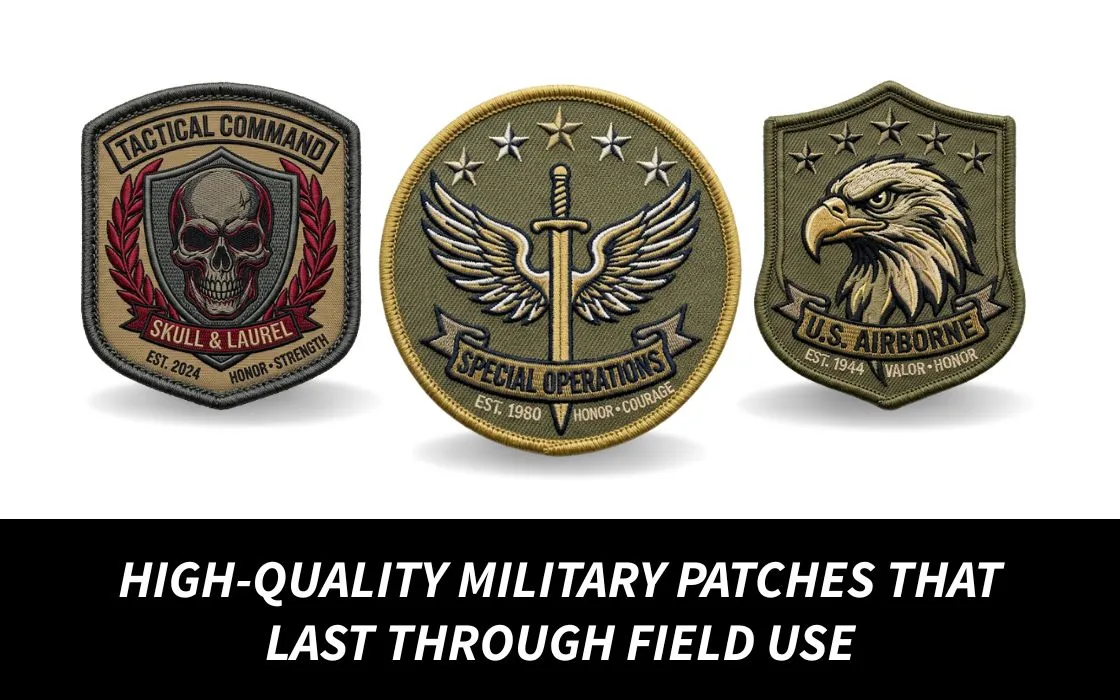
Field use isn’t gentle.
Heat. Sand. Rain. Sweat. Friction from plate carriers and packs. Long deployments. Rough terrain. Military patches don’t sit in clean display cases… they move, bend, drag, and endure.
So when we talk about military patches, durability isn’t optional. It’s expected.
A patch that fades in six months? That’s a failure. One that frays after repeated washing? Not acceptable. Military gear is built tough. Patches should be no different.
Let’s break down what actually makes a patch last in the field… and what separates high-quality production from shortcuts.
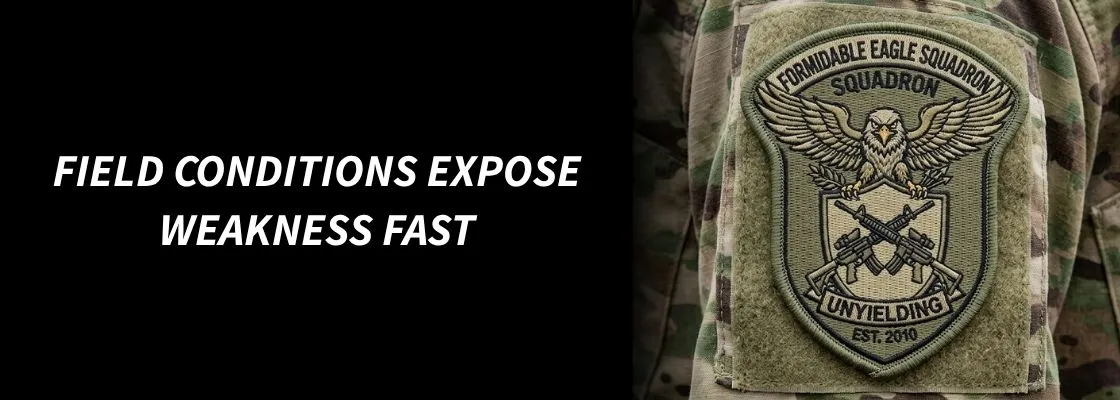
Field Conditions Expose Weakness Fast
In garrison, almost any patch looks fine. In the field, weaknesses show immediately.
Low-density stitching starts pulling. Edges curl. Threads snag on gear. Backing softens after moisture exposure.
And once damage begins, it spreads.
High-quality military patches are built with this reality in mind. They’re reinforced before they ever touch a uniform. That’s the difference.
Material Matters First
The base material determines how a patch performs under pressure. And not all materials respond the same way to extreme conditions.
Embroidered Military Patches
Traditional. Recognizable. Professional.
Embroidered military patches remain widely used, especially for standard issue uniforms. When produced with high thread density and colorfast dyes, they handle repeated wear surprisingly well.
Strong embroidery resists:
- Fading under UV exposure
- Fraying along borders
- Thread separation
But quality is key. Thin thread or low stitch count weakens the structure. That’s where failures happen.
PVC Military Patches
For field operations, PVC patches are becoming increasingly common. They’re flexible, waterproof, and resistant to abrasion.
No threads means no fraying. Mud wipes off easily. Colors stay bold even in intense sunlight.
Tactical units often prefer PVC military patches for plate carriers, field jackets, and gear bags. They’re lighter than they look and built for harsh environments.
They may lack the traditional texture of embroidery, but in pure durability terms, they perform extremely well.
Woven Patches
Woven patches offer fine detail and smoother texture. They’re good for unit insignias that require precise lines or smaller lettering.
While not as rugged as PVC, woven military patches still provide solid performance when reinforced properly. They’re often chosen when clarity of detail is a priority.
Border and Edge Reinforcement
The edge of a patch takes the most abuse.
Merrowed borders… those thick stitched edges… protect against unraveling. Heat-cut and sealed edges also work well when done correctly.
Weak edges fail first. Always.
High-quality military patches use reinforced borders to prevent lifting or curling, even after repeated washing and wear. It’s a small detail, but it extends the life of the patch significantly.
Backing Options for Field Use
Attachment matters as much as material.
Sew-On Backing
Permanent and strong. Ideal for standard uniforms that don’t require removal.
Hook-and-Loop (Velcro) Backing
Essential for tactical gear. Allows swapping between identifiers, ranks, or unit tags.
However, not all Velcro is equal. Cheap hook-and-loop wears out quickly. Industrial-grade backing holds through repeated removal without losing grip.
When ordering military patches, always confirm the backing quality. A durable patch with weak backing still fails.
Weather Resistance and Color Retention
Sun exposure in desert environments can bleach low-grade thread. Moisture in humid climates can weaken backing. Cold temperatures can stiffen inferior PVC blends.
High-quality manufacturers account for these variables. They use UV-resistant dyes. Strong adhesives. Flexible PVC formulas that don’t crack in cold weather.
The goal is simple: military patches that look sharp from deployment start to finish.
Manufacturing Precision Makes the Difference
Two patches may look identical at first glance. But one lasts years, and the other degrades quickly.
The difference lies in:
- Stitch density
- Thread quality
- Mold precision (for PVC)
- Border reinforcement
- Backing adhesion strength
Reputable manufacturers don’t cut corners here. They understand that military patches carry meaning, not just decoration.
If you’re sourcing patches that need to withstand real field conditions, working with an experienced provider like Quality Patches ensures materials and construction match operational demands. They focus on durability, not just appearance.
Long-Term Value Over Short-Term Cost
It’s tempting to prioritize price. Especially with bulk orders.
But replacing worn patches repeatedly costs more over time. It also disrupts uniform consistency. And in military environments, consistency matters.
High-quality military patches may cost slightly more upfront, but they reduce replacement frequency. They maintain appearance standards. They perform under pressure.
That’s value.
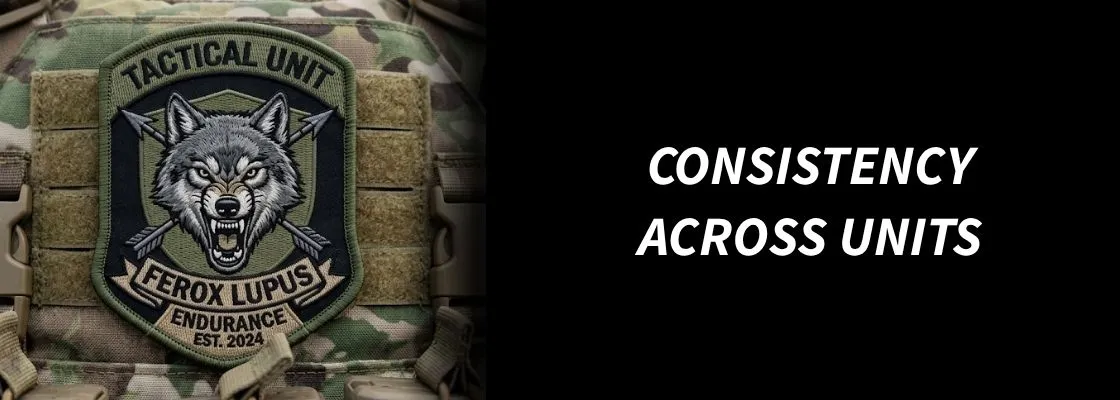
Consistency Across Units
When patches are ordered in bulk, every piece should match perfectly… color tone, border thickness, dimensions.
Uniformity strengthens unit identity. It signals professionalism.
Established manufacturers store digital proofs and molds for future reorders, ensuring consistency years later. Quality Patches provides this level of continuity, so units don’t end up with slightly different shades or inconsistent stitching over time.
Wrap up!
Military environments are demanding. Gear fails fast when quality isn’t there.
High-quality military patches survive friction, heat, rain, and time. They maintain clarity. They stay attached. They continue representing the unit properly.
Choose material based on environment. Reinforce borders. Confirm backing strength. Work with professionals who understand field conditions.
Because in the field, durability isn’t impressive. It’s expected.
FAQs
- Which material is best for field-use military patches?
PVC performs exceptionally well in harsh conditions due to water resistance and abrasion durability. High-density embroidery also holds up well when reinforced properly. - Do embroidered military patches fade in sunlight?
Low-quality thread fades quickly. Premium colorfast thread resists UV damage much longer. - Are Velcro-backed military patches durable enough for combat gear?
Yes, when industrial-grade hook-and-loop backing is used. Inferior backing may wear out faster. - How long should high-quality military patches last?
With proper materials and construction, they can last several years, even in active field environments. - Is it worth paying more for reinforced borders?
Absolutely. Reinforced edges prevent fraying and significantly extend patch lifespan.