 Skip to content
What Early Biker Patches Looked Like (And How They Changed Over Time)
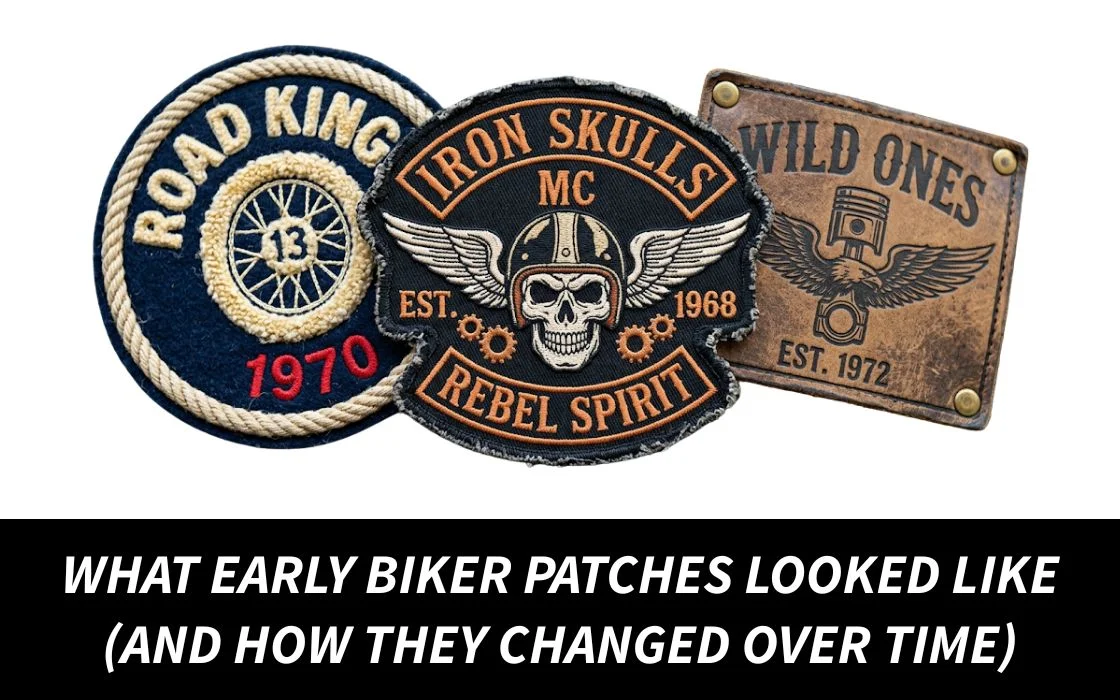
If you look at biker culture today, patches are everywhere. Big back pieces, club logos, small badges on the front… it all feels established, almost like it’s always been that way.
But it wasn’t always like this.
Early biker patches looked very different. Simpler. Rougher. Less polished. And honestly, that’s what made them special.
They weren’t designed for aesthetics first. They were about identity, belonging, and sometimes… just making a statement without saying a word.
To understand where biker patches are now, you’ve got to go back to where they started.
Where It Really Began
A lot of people don’t realize this, but the roots of biker patches go back to military culture.
After World War II, soldiers came home. Many of them were used to structure, brotherhood, and wearing insignia that represented their unit.
That habit didn’t just disappear.
When some of these veterans got into motorcycles, they carried that same mindset with them. Groups formed. Clubs started taking shape. And naturally, they began using patches to represent who they were.
Early biker patches weren’t fancy. They were basic. Sometimes hand-made. Sometimes stitched together without much consistency.
But they meant something. That was the point.

The Look of Early Biker Patches
If you saw one back then, you’d notice the difference immediately.
No perfect embroidery. No sharp digital designs. No clean edges like today.
Early biker patches were often:
- Roughly stitched
- Limited in color
- Simple in design
- Made with whatever materials were available
A lot of them had bold lettering. Club names, nicknames, maybe a symbol. That’s it.
No overthinking. No trying to impress outsiders.
It was more like… “this is who we are.” Straightforward.
And honestly, that raw look gave them character.
The Rise of Club Identity
As motorcycle clubs grew, patches started becoming more organized.
It wasn’t just random designs anymore. There was structure behind it.
Clubs began using a standard format. The three-piece patch became more common… top rocker, center logo, bottom rocker.
Now biker patches weren’t just about showing a name. They showed territory, identity, and affiliation.
You could look at someone’s back and know exactly where they stood.
And that’s when patches started carrying more weight.
Not just style. Not just identity. Something deeper.
Symbols Started Meaning More
Early on, designs were simple. But as time went on, symbols became more intentional.
Skulls, wings, flames, animals… these weren’t random choices. They reflected attitude, beliefs, and sometimes the culture of the club itself.
With biker patches, every element started to matter.
Colors had meaning. Placement had meaning. Even the size of a patch could say something.
It became a kind of language. Not written, not spoken, but understood.
And if you didn’t understand it… you stayed out of it.
From Handmade to More Refined
As demand grew, the quality of biker patches started to improve.
Clubs wanted consistency. They wanted patches that looked the same across all members.
So production shifted.
Instead of hand-stitched pieces, more professional manufacturing came in. Embroidery got cleaner. Materials got stronger. Edges looked better.
But here’s the thing… even as biker patches became more refined, clubs still held onto that original meaning.
The look improved. The purpose stayed the same.
The Balance Between Tradition and Style
This is where things get interesting.
Modern biker patches look way better than early ones. No doubt about that. Cleaner stitching, better colors, more durability.
But they still follow the same structure in many cases.
That’s not by accident.
Clubs respect tradition. They don’t just throw it away for the sake of design.
So what you see today is a mix. Old-school meaning with modern execution.
That balance is what keeps biker patches relevant even now.
How Biker Patches Changed Visually
If you compare early patches to modern ones side by side, the difference is clear.
Today’s biker patches are:
- More detailed
- Better stitched
- More durable
- Designed with precision
Colors pop more. Designs are sharper. Materials last longer.
But at the same time, the core elements haven’t changed much.
You still see bold logos. Strong symbols. Clear identity.
Just… executed better.
Why Quality Matters Now More Than Ever
Back then, rough patches worked because that’s all there was.
Now? Expectations are higher.
A poorly made patch stands out immediately. Bad stitching, fading colors, weak backing… it all shows.
And in biker culture, details matter.
That’s why many clubs now work with experienced makers like Quality Patches. Not because they want something flashy, but because they want something that lasts and represents them properly.
When a patch is worn on a vest or jacket for years, it needs to hold up. No one wants something falling apart after a few rides.
More Than Just Design
Here’s the thing most people miss. Biker patches were never just about how they look.
They’re about belonging. Identity. Respect. That hasn’t changed since the early days.
Even as designs evolved, even as production improved, that core meaning stayed the same.
That’s why people still care about them so much. It’s not fashion. It’s culture.

What Stayed the Same Over Time
A lot has changed visually, but some things didn’t.
Patches still represent:
- Club identity
- Personal pride
- Brotherhood
They still hold value inside the community.
You don’t just wear any patch. It means something when you do.
That mindset goes all the way back to the early days.
Wrap up!
Early biker patches weren’t perfect. They weren’t polished.
But they were real.
They came from a place of identity, connection, and shared experience. Over time, they evolved. Better materials, better design, better consistency. But the meaning behind them didn’t fade. That’s why biker patches still matter today.
They carry history. They represent something bigger than just the person wearing them.
And if you’re creating patches now, it’s worth getting them right. Not just visually, but in terms of quality and durability too.
Working with a team like Quality Patches makes that easier. You get patches that respect tradition but still look sharp and last long.
Because at the end… Styles change. Quality improves. But meaning? That stays.