 Skip to content
Choosing the Right Size and Placement for Biker Patches
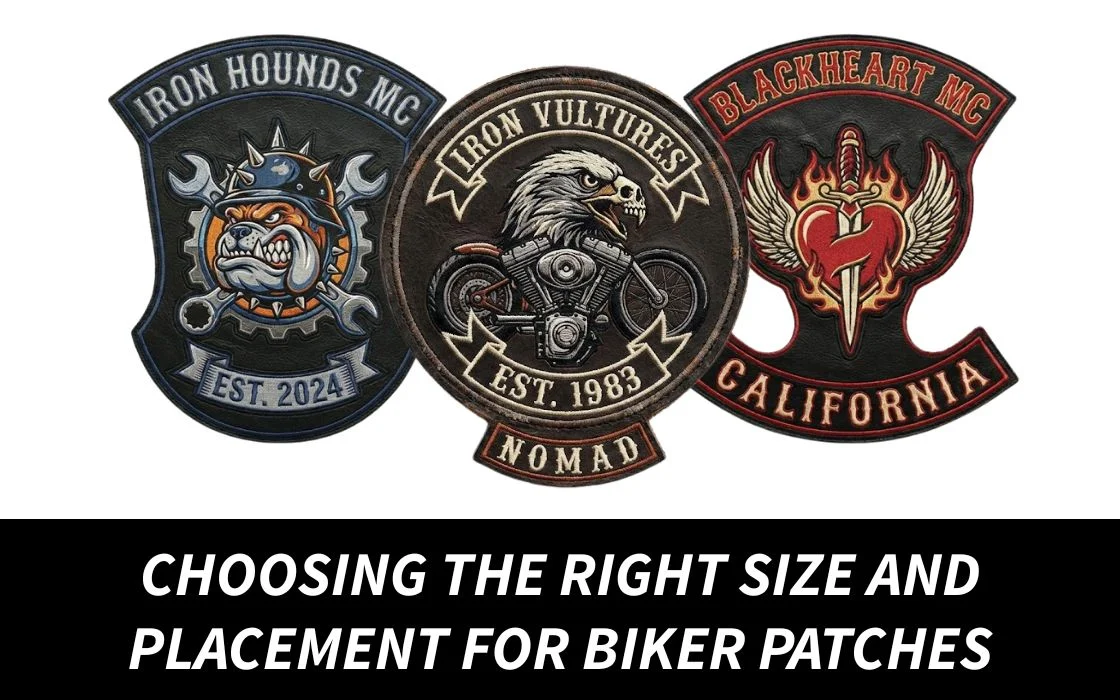
Choosing the Right Size and Placement for Biker Patches
Walk into any biker meet or rally and you’ll notice something fast. Every jacket tells a story. Some loud. Some subtle. But the first thing anyone sees? The patches.
Size. Placement. Layout.
Mess this up and even the best design looks off. Get it right and the whole jacket speaks without you saying a word.
A lot of riders focus only on design. Logo looks cool? Done.
But that’s only half the game. Where the patch goes and how big it is matters just as much. Sometimes even more.
Let’s talk about it properly.

Why Size Matters More Than You Think
You might think, “Just make it big so people can see it.”
Not always the best move.
Too big? Looks crowded. Feels heavy. Overpowers everything else on the jacket.
Too small? No impact. No presence. Gets lost from a distance.
A biker patch should feel balanced. Visible from a few steps away, but not screaming for attention like a billboard. Clean and confident.
Most riders don’t realize sizing changes how others read your patch. A well-sized patch gives authority. A badly sized one makes the whole jacket look amateur. Harsh truth, but real.
Back Biker Patches: The Centerpiece
The back patch is the main event. Always.
This is what people see when you ride ahead or walk into a spot. It represents your club, crew, or identity.
Typical back patch sizes range between 10 to 14 inches wide. Sometimes larger for full back designs. Depends on jacket size too. A large patch on a small vest looks awkward. Same with a tiny patch floating on a big jacket.
You want the patch to:
- Sit centered between shoulders
- Leave breathing space around edges
- Not fold or curve when worn
If it bends too much, it’s too big.
If it looks lost, it’s too small.
Balance is everything.
Top Rocker and Bottom Rocker Placement
For club-style biker patches, rocker placement matters a lot. Top rocker usually carries the club name. Bottom rocker often shows location or chapter.
These should follow the curve of the main back patch. Not too far. Not touching either.
Spacing should feel natural. Like one complete design.
If rockers sit too far apart, the jacket looks disconnected.
Too close? Feels cramped. Hard to read.
Good manufacturers help you size these properly so everything flows together. Experienced teams like Quality Patches usually guide riders through layout before production. Saves headaches later.
Biker Patches on Chest: Small but Important
Chest biker patches might be smaller, but they matter. A lot.
Name patches, rank patches, small logos; these add personality. They should be readable up close without dominating the front.
Typical chest patch size:
3 to 5 inches wide. Sometimes smaller for name strips.
Placement? Usually above the pocket or on the upper chest. Keep them aligned. Crooked patches ruin the clean look fast.
A clean front with balanced chest biker patches gives that professional biker look. You know it when you see it.
Biker Patches on Sleeves and Side Details
Sleeve patches are optional, but when done right, they look great.
Flags. Event patches. Small symbols.
Keep these smaller. Usually 2 to 4 inches.
Too large on sleeves makes movement awkward and looks cluttered.
Spacing matters here too. Don’t stack patches too tightly. Let each one breathe. Every patch should have its own space to stand out.
Think About Movement
Here’s something many riders forget; jackets move.
When you sit on a bike, the fabric shifts. Shoulders stretch. Back tightens.
A patch placed perfectly while standing might wrinkle when riding. That’s why placement testing helps. Put the jacket on. Sit. Move around. Check in a mirror.
If the patch folds or hides under arms, adjust position before final stitching. Once it’s sewn properly, fixing it later is annoying and sometimes impossible without damage.
Jacket Type Changes Everything
Denim vest? Leather jacket? Riding hoodie?
Each material affects patch placement.
Leather is thicker. Needs stronger stitching and careful positioning.
Denim is flexible but can stretch slightly over time.
Lightweight fabric may need backing support.
The right manufacturer will guide you on backing types and placement for each material. Quality Patches, for example, often recommends backing based on jacket type so patches sit clean and stay secure long term.
Avoid Overcrowding
This is the biggest mistake riders make.
Too many patches. Too close together.
Every patch should have breathing space. A crowded jacket looks messy and hard to read. The best biker jackets? Clean layout. Strong focal point. Supporting patches placed smartly.
Sometimes less really does look better.

Visibility From a Distance
Ask yourself one question:
Can someone recognize your patch from across a parking lot?
If not, sizing might be off. Or placement.
A good biker patch should be readable from a distance and clear up close. That’s the sweet spot.
Bold designs help. But placement helps more. A perfectly centered patch with good size gets noticed instantly.
Long-Term Wear Matters
Biker patches go through a lot. Sun. Rain. Wind. Long rides. Washing.
Bad placement leads to faster wear. Edges start lifting. Threads loosen.
Strong stitching and correct placement prevent this.
High-quality patches with proper backing last years without issues. Cheap ones? Start fading and peeling quickly.
That’s why serious riders invest in well-made patches from experienced makers like Quality Patches. Good material plus correct sizing and placement means the patch ages well. And looks better over time.
Planning Before Ordering
Before placing an order, always plan layout.
Measure your jacket.
Sketch placement.
Think about future patches too. Leave space if you plan to add more later.
Many riders rush into ordering and regret sizing later. Taking an extra day to plan saves money and frustration.
A reliable patch maker will help you finalize size and placement before production. Use that. Their experience prevents costly mistakes.
Wrap up!
Biker patches aren’t just about design. Size and placement shape how your entire jacket looks and feels.
Right size = strong presence.
Right placement = clean identity.
Right quality = long-term durability.
Take time to plan. Measure twice. Choose quality materials. Work with people who know patches inside out.
When everything is done right, your jacket won’t just look good. It’ll tell your story the moment you ride in.